
Blog
ASO frameworks, teardowns, and experiments. Short, practical, opinionated.
-

App Store Marketing Weekly – Week 37 (2026)
This week’s theme: platform ‘infrastructure’ changes masquerade as product work. Rosetta warnings and ATT prompt redesigns both land as support load and measurement noise unless you treat them like planned releases.
-

ConsultMyApp: App ratings are a growth lever (they gate chart rank, organic capture, and paid conversion)
A credited summary of CMA/APPlyzer analysis across 17k+ US App Store apps. Their framing: ratings are less a ‘nice to have’ and more a qualifying condition for top-chart performance, plus a direct lever on store-page conversion for paid traffic.
-
Apple Developer: App Store submissions open for iOS 27 etc. (Xcode 27 RC, asset previews, and April 2027 SDK gates)
A credited summary of Apple’s Sept 9 note: App Store submissions are open for the latest OS releases. The operational takeaway: treat Xcode RC + Rosetta/Intel cutoff + age rating questions + new creative surfaces as a planned release, not a last-minute scramble.
-

RevenueCat: the 15% App Store fee is the default for most devs (if you actually enroll)
A credited summary of RevenueCat’s walkthrough of Apple’s Small Business Program and Google’s 15% service fee tier. The reminder: if you are under $1M, commission is an ops checkbox that materially changes your payback maths.
-

Apple’s ATT prompt is changing in 2026 (Germany’s FCO case): what to watch
Didomi summarises the Bundeskartellamt decision and Apple’s commitments to make ATT consent experiences more neutral and closer to Apple’s own. Practical takeaway: expect prompt copy/layout changes, and plan measurement baselines + consent UX work like a product update.
-

Google Play Developer Programme Policy update (effective Aug 26, 2026): why ‘policy’ is now a release dependency
Google’s Developer Programme Policies took effect on Aug 26, 2026 (unless otherwise stated). The practical takeaway for app teams is that policy enforcement increasingly behaves like a build-and-release dependency, especially for chat/social/dating features and child-safety controls.
-

AppsFlyer: cross-channel marketing analytics (and why ‘two dashboards’ is not it)
AppsFlyer argues cross-channel analytics is an identity problem first: without a first-party user ID layer, every channel over-claims conversions and your ROAS math quietly breaks.
-

RoastMyApp: 51 paywall experiments (with real examples) to grow mobile app revenue
A long but practical swipe-file: RoastMyApp groups 51 paywall experiments into five levers (design, pricing, messaging, offers, personalization) so teams can test methodically instead of randomly.
-

September 2026 Google System Updates: Play Store v53.1 adds a new nav bar, and ‘similar apps’ gets a punchier hook
9to5Google’s September 2026 System Updates roundup highlights Play Store v53.1: a new navigation bar on Home pages, clearer device-install signals in recommendations, and a new ‘short description’ hook in Similar apps that could shift how users compare alternatives.
-
Swiggy’s transition to native is a growth story in disguise: performance work that moved conversion
Apple’s latest Developer Story on Swiggy is a reminder that ‘app UX’ work is often growth work. Swiggy describes moving key flows from hybrid to Swift/SwiftUI, shipping fast by rebuilding high-impact journeys first, and seeing downstream improvements beyond just load times.
-
Google Play policy deadlines: a single register of what’s left in 2026 (PrimeTestLab)
A credited summary of PrimeTestLab’s ‘deadlines register’ for Google Play policy changes. The useful bit is not the list, it’s the operational framing: Google’s sources disagree in places, so teams should build their release calendar for the earliest plausible enforcement date.
-

Hello Developer (Sept 2026): Apple’s ‘what to ship next’ signal, plus a quiet warning for Intel Mac apps
Apple’s September 2026 Hello Developer edition is mostly a grab-bag (Apple Event, an Apple Intelligence Group Lab video, a developer story). The useful part is the signal: Apple is pushing teams toward AI-ready workflows and inclusive UX, while the platform quietly sunsets legacy paths like Intel-only Mac apps.
-

Firebase iOS SDK 12.18.0 (Aug 19, 2026): FCM token API deprecations and steadier analytics session_start
A credited summary of Firebase’s iOS SDK release notes. The practical bits for growth teams are operational: token APIs are shifting (which can break push plumbing quietly), and analytics session_start reliability got a fix.
-

ConsultMyApp: the UK gambling App Store search map (why ‘bingo cash’ is its own market)
A credited summary of ConsultMyApp’s UK gambling search research across iOS organic, Google Play organic, and Apple Search Ads. Useful pattern: intent splits are sharper than category labels, and organic P1 rarely equals ‘page ownership’ once ads are included.
-

ConsultMyApp: how the Apple Ads auction really seems to work (relevance gate, then performance auction)
A credited summary of ConsultMyApp’s analysis of real UK Apple Search Ads auction stacks. The practical takeaway is a cleaner mental model: eligibility is relevance-gated (with different thresholds for exact/broad/Search Match), but ordering is heavily bid and predicted performance.
-

Optimove: four CRM shifts that keep showing up in 2026 (incrementality, zero-party data, 3-second hooks, loyalty behaviour)
A credited summary of Optimove’s CRM trends write-up. The useful framing is the same pressure triangle most app teams feel: more financial scrutiny, weaker tracking signals, and less attention per message.
-

Apple Ads Platform API (v1.0): one API for App Store + Apple Maps, and the Campaign Management API sunsets Jan 26, 2027
A credited summary of PPC Land’s write-up on Apple’s new Apple Ads Platform API. The headline for growth teams is the migration deadline: Jan 26, 2027 for the legacy Campaign Management API.
-

Rosetta is on a clock: macOS 27 is the last release that will run Intel-only Mac apps on Apple silicon
Apple confirms the transition period is ending. macOS 26.4+ may warn users when apps rely on Rosetta, and macOS 27 is the final release to support it (with a narrow exception for older, unmaintained gaming titles).
-

Custom components for paywalls: a bigger creative canvas, with guardrails
RevenueCat adds custom components (HTML/CSS/JS bundles) to Paywalls and web-to-app Funnels, so teams can ship branded motion and expandable FAQs without rebuilding the checkout stack.
-

Apple will wind down Rosetta support for Intel-only macOS apps (what changes for teams)
Apple says macOS 27 will be the final release to support Rosetta. If your macOS app is still Intel-only, users on Apple silicon will first see warnings (macOS 26.4+), then lose compatibility. This is a release-cadence and revenue risk, not a ‘nice to have’ refactor.
-

Google Play policy announcement (July 15, 2026): verification, permissions, and ‘quiet’ compliance cliffs
Google’s July 15 policy announcement is a grab bag, but three items matter operationally: (1) READ_CALL_LOG can’t be used for account verification via phone call, (2) developer verification and app registration checks, and (3) the Aug 31, 2026 target API deadline.
-

Play Billing Library deprecation FAQ: the deadline is a release-cadence cliff, not a ‘billing detail’
Google’s Play Billing Library deprecation FAQ (last updated Aug 14, 2026) is the canonical reference for what stops working when older Billing Library versions age out, and what counts as an acceptable extension path. Treat this as a shipping deadline, not a finance footnote.
-

RevenueCat’s WWDC26 subscription roundup: annual plans can bill monthly, cancellation save-flows get real, and ‘B2B-ish’ subscriptions arrive
RevenueCat’s WWDC26 breakdown highlights three practical subscription changes: annual plans can be paid monthly (with a 12-month commitment), Apple’s new Retention Messaging surfaces offers at cancel-time, and new group/volume purchase flows push subscriptions beyond ‘one person, one Apple ID’.
-
Droid Life’s August Play updates: new discovery surfaces in Play search, plus device-connectivity plumbing (files, eSIM transfers, notifications on ‘Googlebook’)
Droid Life rounds up Google Play services v26.34 and Play Store v53.0 (Aug 31, 2026). The headline for app teams is incremental but real: Play search keeps expanding into content discovery (books/comics, creators, photo-based ‘find apps like this’), while Play services adds more device-connectivity hooks and onboarding tweaks that can change user expectations.
-

Engadget: Phil Schiller reportedly steps back from running the App Store (and Apple events), with Services taking back the remit
Engadget reports (via Bloomberg) that Phil Schiller is stepping down from overseeing the App Store and product events. The App Store is said to move back under Apple’s Services org (Eddy Cue), with deputies taking day-to-day ownership. For app teams, it’s a reminder that policy, review nuance, and platform priorities often shift with internal structure.
-

App Store Marketing Weekly – Week 36 (2026)
This week’s theme: monetization is getting ‘policy-shaped’. EU payment choices now come with 12-month commitments and child-safety gates, and hybrid monetization patterns are pushing teams to unify ‘free’ and ‘paid’ access under one entitlement model.
-

Apple Developer: EU app distribution hub (Aug 18, 2026) is a product decision, not paperwork
A credited summary of Apple’s ‘Changes for apps in the European Union’ support hub. The key shift is operational: payments, link-out, and alternative distribution now come with clear minimum-term commitments and child-safety gating requirements.
-

RevenueCat: rewarded ads and no paywall (and why entitlements are the real unlock)
A credited summary of RevenueCat’s build story for a small game monetized with one rewarded-ad button. The useful bit is the pattern: treat ad rewards like timed entitlements, so ‘watch to unlock’ and ‘pay to unlock’ share the same access checks.
-

AppFollow: mobile game retention in 2026 is a workflow (metrics plus store feedback)
A credited summary of AppFollow’s mobile game retention guide. The core idea is simple: retention charts tell you when cohorts dropped, but store reviews and version-level sentiment often tell you why, earlier.
-

UK CMA consults on steering and NFC access: payments and wallets become product decisions
A credited summary of the UK Competition and Markets Authority consultation on new conduct requirements for Apple and Google. If ‘steering’ constraints loosen and NFC access opens up, app teams inherit real UX, trust, support, and measurement work.
-

Userpilot’s product lifecycle marketing framework: align teams before you ship messages
A credited summary of Userpilot’s 5-step lifecycle marketing framework. The useful bit is the sequencing: agree the journey, pick the lifecycle stage that matters this quarter, then design bumpers (in-product + conversational) before anyone writes campaigns.
-

Apple Developer tax and price updates (Aug 27, 2026): new VAT/DST changes and equalized price shifts
A credited summary of Apple’s Aug 27, 2026 tax and price update. The headline is routine, but the operational impact is real: proceed changes in Morocco/Republic of the Congo/Tanzania, and equalized price updates landing Sept 14 if those storefronts aren’t your base.
-

Customer.io Summer 2026 release: geofencing, Live Activities, a notification inbox, and a real preference center
A credited summary of Customer.io’s Summer 2026 release webinar + Q&A. The theme is ‘messaging as infrastructure’: location triggers, lock screen updates, inboxes, and channel preference management becoming table stakes.
-

RevenueCat: Play Billing Library v9 is a small API bump, but it sits on top of bigger churn and discovery shifts
A credited summary of RevenueCat’s May 2026 deep dive on Play Billing Library 9.0 and the broader Google Play I/O storyline. The practical takeaway is to treat billing upgrades as a revenue-protection deadline, and treat new discovery surfaces as deep-link and content-indexing work.
-

App Store Connect quietly tightened campaign link and subscription guidance (Aug 2026 release notes)
A credited summary of the Aug 19, 2026 App Store Connect release notes. The practical impact is operational: campaign links have minimum data thresholds, subscription pricing rules have edge cases, and small editorial changes can break checklists.
-

Update: Sign in with Apple relay emails will be issued on private.icloud.com (Aug 2026)
Apple’s Aug 24, 2026 update confirms new Sign in with Apple relay addresses will move from privaterelay.appleid.com to private.icloud.com, but iCloud+ Hide My Email will stay on icloud.com. This is a classic ‘silent break’ risk for validation, allowlists, and CRM deliverability.
-

Korea App Store age ratings update: GRAC overrides now, two descriptors shift to 12+ in Oct 2026
A credited summary of Apple’s Aug 12, 2026 update to Korea App Store age ratings: you can now override with a GRAC Rating Classification Number, and two content descriptors will move from All to 12+ starting October.
-
Google Play: US listings can be shared with third-party Android app stores (opt-out + catalog settings)
A credited summary of Google Play Console’s July 22, 2026 notice: your US Play listing assets (name, icon, description, screenshots, video) may be shared with enrolled third-party US Android app stores unless you change Catalog Settings.
-

Google Play Store v52.9 (Aug 24, 2026): App Bundles, better inline install UX, and more on-listing content
A credited summary of 9to5Google’s Aug 24, 2026 roundup of Google System Updates: Play Store v52.9 adds App Bundles discovery, improves inline install fallback behavior, and surfaces more content directly inside the listing experience.
-

App Store Marketing Weekly – Week 35 (2026)
This week’s theme: growth is getting more ‘operational’. EU terms are turning payments into a product decision, and lifecycle messaging keeps reminding teams that channels are fragile. The boring work (preferences, logs, decision memos) is becoming the advantage.
-

Apple’s updated Developer Program License Agreement (EU terms) is live (Aug 18, 2026)
A credited summary of Apple’s notice that Attachment 14 is now part of the Apple Developer Program License Agreement, covering the updated EU terms for alternative distribution, alternative payments, and business terms, effective Oct 1, 2026.
-

Push is not a channel, it is a trap door: 11 push platforms compared (Courier)
A credited summary of Courier’s August 2026 comparison of push notification platforms. The useful takeaway is not the vendor list, it is the reminder that push alone rarely survives contact with real user preferences, legal requirements, and support.
-

Visible hit $10M ARR without lifecycle emails: qualify hard, earn trust, then scale
A credited summary of RevenueCat’s Sub Club episode on Visible: why they prioritised retention and trust over funnel tweaks, and how their UGC ad engine actually works.
-

How metadata impacts Apple Ads auction position (ConsultMyApp)
A credited summary of ConsultMyApp’s APPlyzer study on what actually correlates with better Apple Ads (Search Results) auction ranks. The punchline: title relevance shows a robust relationship with auction position, while screenshots and CPP usage are more tangled up with bid and performance.
-

Apple updates EU terms: unified commissions, alternative payments rules, and a ‘Core Technology Commission’
Apple’s Aug 18, 2026 update reworks EU business terms across IAP, alternative payments, link-out purchases, and alternative distribution. The practical impact is not just fees, it is checkout UX, parental gates, fraud risk, and support workload.
-

Apple says the App Store ecosystem hit $1.4T in 2025 billings and sales: why the number matters (and what it doesn’t mean)
Apple’s June 4, 2026 update positions the App Store as a global commerce engine. For practitioners, the value is less the headline figure and more the reminder: the store is an ecosystem of physical + digital spending, and category mix varies sharply by region.
-

Apple is simplifying EU distribution terms, and turning the ‘Core Technology Fee’ into a 5% commission
Apple’s new EU terms aim to reduce the ‘multiple track’ complexity by moving every EU-distributing developer onto one set of business terms, effective Oct 1, 2026. The headline change is replacing the per-install Core Technology Fee with a 5% Core Technology Commission on digital transactions in apps distributed outside the App Store. Tiny win: write a one-page ‘EU payments + distribution’ decision memo so marketing, product, and legal stop debating this in Slack.
-

Apple’s proposed ‘link-out’ commission is the new tax you have to model, not just argue about
TechCrunch reports Apple has proposed a 15% commission on purchases made via external links in iOS apps (with lower rates for Small Business Program and certain partner programs). Whether it sticks or not, this is the moment to stop thinking ‘link-out = free’ and start treating it like a margin and measurement problem. Tiny win: build a simple ‘link-out unit economics’ sheet with best, base, worst assumptions before you redesign checkout.
-

Agentic CRM is not the headline, the governed data layer is (especially in regulated markets)
Xtremepush’s ‘Fast Track alternatives’ piece is a vendor comparison with a useful underlying point: ‘AI agents’ are table stakes, but compliance has to be enforced at the data and activation layer, not left to the agent to remember. Tiny win: treat ‘suppression + consent + self-exclusion’ as a platform-level contract, then test it like a billing system.
-

Apple’s Aug 17, 2026 release drop: iOS 27 beta 6, point releases, and what it means for your release cadence
Apple’s Releases page bundles OS betas, point releases, and TestFlight/App Store Connect updates. The marketer takeaway: treat these drops as a recurring ‘release friction’ risk. Tiny win: add a weekly scan and a QA checklist trigger when TestFlight or ASC updates land.
-

Google Play (US): your listing assets can now be shared with third-party Android app stores
Google says US Play listings (name, icon, description, screenshots, video) can be made available to enrolled third-party US Android app stores, with downloads still completed through Google Play. Practical takeaway: treat your listing as a portable asset and audit what it says out of Play’s UI.
-

In-app messaging that works: stop touring the UI and start triggering the next useful action
Userpilot’s examples are basically one principle: in-app messages should be contextual and action-shaped (welcome survey, checklist, tooltip, banner, micro-survey), not a guided tour of every menu. Tiny win: define 2 to 3 activation events, then build messages that only fire when they help the user reach one of them.
-

Tenjin’s 2026 mobile game ad monetization benchmarks: iOS share up, AppLovin stronger, US concentrating
Tenjin (with CAS) shares 2026 ad monetization benchmarks for mobile games, including platform mix, network share shifts, and country concentration. Useful as a reality check when your IAA revenue ‘feels weird’.
-

User retention in 2026 is two streams: human signals and agent signals
Userpilot argues retention dashboards are about to lie to you unless you measure both human usage and AI-agent task success. Practical takeaway: segment retention by user type, and treat agent task completion as activation.
-

Google adds one-handed gestures to Wear OS 7: a tiny UX change that makes apps feel ‘effortless’
Google’s new one-handed gesture framework for Wear OS 7 (via Compose for Wear OS 1.7 beta) lets users trigger a primary action (double pinch) or dismiss (wrist turn). The takeaway for growth teams: reduce friction on high-frequency actions and you often get retention ‘for free’.
-

Apple Maps ads are now live in the US and Canada: what ‘Ads on Maps’ signals for intent marketing
MediaPost reports Apple has opened ‘Ads on Maps’ to businesses in the US and Canada, with targeting by location and time/day, budget controls, and policy restrictions on categories. It is another step toward Apple Ads becoming a multi-surface ecosystem.
-

Amplitude brings Guides and Surveys to mobile: onboard and collect feedback without annoying pop-ups
Amplitude’s Guides and Surveys now supports iOS, Android, and React Native, and the important bit is the operating model: use behavioral data to trigger contextual onboarding and feedback at the right moments, then measure impact beyond clicks.
-

App Store Marketing Weekly – Week 34 (2026)
This week’s theme: growth is turning into a ‘signal + guidance’ discipline. If your measurement layer is messy, AI will scale the wrong truth. If your onboarding is generic, retention will keep leaking.
-

MAU Vegas 2026 takeaways: attention is scarce, measurement is the moat, and ‘signal quality’ is the new growth job
AppsFlyer’s MAU Vegas roundup argues the new constraint is attention (not creative supply). The practical implication is harsh: if your measurement layer is fragmented, AI will scale the wrong decisions faster than your team can catch them.
-

Apple is expanding App Store creative surfaces: product page header, search results, In-App Events (Apple Developer)
Apple confirms new App Store creative assets are coming, and points teams to best practices plus design templates. This is a reminder that store ‘placements’ are turning into creative inventory with real workflow impact.
-

Apple Ads Share of Voice: why tracking the top 50 auction positions changes the story (ConsultMyApp)
ConsultMyApp argues that ‘top 2 visible ads’ reporting is basically screenshot monitoring. Real Apple Ads SoV needs the top 50 auction stack, because ranks 3 to 50 still rotate into delivery and reveal competitor moves earlier.
-

Apple Search Ads in UK Finance: paid visibility is not just ‘the banks’ anymore (ConsultMyApp)
ConsultMyApp benchmarks Apple Search Ads visibility across 40 UK finance keywords. The useful takeaway is not ‘who won’, it is how fragmented intent gets, and how organic leadership can still lose the paid layer above it.
-

UK CMA consults on ‘steering’ rules and NFC access: payments may become a product surface (GOV.UK)
The UK Competition and Markets Authority proposes conduct requirements for Apple and Google that would allow developers to steer users to off-platform payment options, and explores opening NFC access on iOS. This is policy, but it turns into UX, trust, and measurement work fast.
-

Push notifications as product moments, not ‘promo blasts’ (Klaviyo, ex-Strava)
A lifecycle-focused take on mobile push: earn permission, trigger off real moments, and use deep links to shorten the path back to value. Useful even if you are not a Klaviyo customer.
-
TestFlight (Aug 11, 2026): you can submit builds made with Xcode 27 beta 5 + the iOS 27 beta 5 SDKs
Apple updated TestFlight submission support so you can now submit builds created with Xcode 27 beta 5 using the iOS 27.0 beta 5 (and related platform) SDKs for internal and external testing.
-

Apple proposes 15% link-out commission in the US: why this turns pricing into funnel design
Per 9to5Mac (Aug 13, 2026), Apple submitted a proposed fee structure for purchases made outside App Store IAP in the US: 15% standard, 10% partner programs and subscription renewals, and 5% for Small Business. For app teams, the interesting part is less the number, and more the operational reality: pricing, UX, entitlement verification, and support now become one system.
-

Affise MMP: choosing an MMP in 2026 is really about what you’ll trust when attribution gets messy
Affise’s MMP comparison is (obviously) vendor-flavoured, but the helpful part is the checklist: SKAN measurement, deep linking, raw data access, and cost aggregation. The real decision is which ‘truth’ you will run the business on when channels and privacy constraints disagree.
-

Android Developers: Jetpack Compose 1.12 (Aug 2026) is a quiet ‘store creative’ update in disguise
Compose’s August 2026 stable release (1.12 / BOM 2026.08.00) adds mesh gradients, wide colour gamut support, new layout primitives, and test/performance improvements. For app teams, this is less about ‘new APIs’ and more about how quickly you can ship polished UI and experiment safely.
-

Apple updates South Korea App Store age ratings: GRAC override support now, and two descriptors shift to 12+ in October
Apple Developer News outlines two Korea-specific age rating changes: you can now override your App Store Korea age rating by submitting a GRAC Rating Classification Number, and in October two ‘infrequent’ content descriptors will move from All to 12+.
-

RevenueCat partners with AB180 to offer local-language support for South Korea (from Aug 13, 2026)
RevenueCat says AB180 will provide free, local-language support to RevenueCat customers in South Korea, covering implementation, onboarding, day-to-day support, and growth strategy.
-

TryPropel: Retention benchmarks are only useful when you anchor them to a category (2026 vertical ranges)
TryPropel compiles 2026 retention benchmarks across ecommerce, subscriptions, and consumer apps. The useful takeaway is the spread: day-30 retention ranges from ~2% (shopping) to ~12% (social), so ‘good’ depends on vertical and metric.
-

Hello Developer (Aug 2026): the quietly useful checklist for what Apple wants you to build next
Apple’s August 2026 ‘Hello Developer’ newsletter is light on hype and heavy on practical pointers. For app teams, it’s a reminder that platform changes land first as templates, docs, and workflow nudges, and those are the bits that quietly affect your release and creative cadence.
-

Apple’s new iOS 27 design kits are a quiet App Store creative deadline
Apple has released updated Figma and Sketch design kits for iOS, iPadOS, and macOS 27, including Liquid Glass updates and expanded component support. If your screenshots and store assets are built in Figma, this is your cue to refresh templates before the fall App Store creative placements land.
-

App Store Marketing Weekly – Week 33 (2026)
This week’s theme: the store and the funnel keep gaining new ‘surfaces’. Creative placements, paid auction visibility, link-out payments, and push notifications all look like channels, but they behave like product UX.
-

justtrack: SKAdNetwork (SKAN 4) is now table-stakes iOS attribution, so treat conversion values as product instrumentation
A short explainer aimed at gaming UA: SKAdNetwork’s delayed, aggregated postbacks make conversion-value schema design a first-class measurement task, and SKAN 4 adds multiple postbacks plus coarse/fine values and anonymity tiers.
-

App Store Connect age rating questionnaire adds social media questions (Apple)
Apple has updated the App Store Connect age rating questionnaire with questions about ‘social media capabilities’. From September 2026, your answers will be required for new apps and updates, so product, legal, and lifecycle teams should align now.
-

Google Play policy announcement (July 15, 2026): permission tightening, AI data responsibility, and admin hygiene
Google Play’s July 15, 2026 policy announcement includes a notable tightening for call-log permissions, a reminder about app registration in Play Console, and a clear line that developers remain responsible for third-party AI integrations under User Data rules.
-

Customer.io: multi-app push in one workspace (and the metrics change you must annotate)
Customer.io is enabling multiple mobile apps per platform within a single workspace. The headline is simpler ops, but the real gotcha is measurement: push metrics shift from per-profile to per-device counts.
-

Push should feel like product, not a megaphone (Klaviyo, ex-Strava playbook)
A credited summary of Klaviyo’s practical push-notification playbook from a former Strava martech lead. The core idea: push works when it is tied to user moments, deep links, and a conservative frequency ramp, not when it copies email calendars.
-

ATT did not trigger a paid-app pivot, but it did change what apps collect (PPC Land)
A credited summary of PPC Land’s write-up on Reinhold Kesler’s updated ATT study: the shift toward paid apps and IAP was statistically real but economically tiny. The clearer long-run adaptation was more (and more linked) data collection in privacy labels.
-

Apple: App Store Connect now lets you submit IAPs and subscriptions via ‘Add for Review’
Apple updated the IAP/subscription submission flow in App Store Connect. Instead of hopping into an app version submission, you can now send IAPs, subscriptions, groups, and non-renewing subs straight from their own sections using Add for Review.
-

AppsFlyer: Marketing attribution in 2026 (models, windows, and what to validate)
AppsFlyer’s refresh on attribution basics is a useful reality check: platform-reported numbers will not agree, single-touch models bias budgets, and mobile adds hard constraints (ATT, SKAN, identity gaps). The actionable bit is the implementation checklist and the reminder to keep validating instrumentation.
-

August 2026 Google System Updates: Play Store v52.6 adds more discovery surfaces (sports carousels, broader search results)
9to5Google rounds up Google’s August 2026 System Release Notes. The headline for app marketers is Play Store v52.6: new sports carousels on Apps Home, richer broad-search results, and tablet tweaks that could change where (and how) users discover app content.
-

Firebase JavaScript SDK 12.17.1 (Aug 2026): small fixes, but a reminder to treat SDK updates as growth reliability
Firebase’s JS SDK 12.17.1 is mostly bug fixes, but the recent 12.17.x line includes changes that affect install stability, Remote Config rollouts, and monitoring hooks. For app teams, this is ‘boring’ work that shows up as conversion stability.
-

Apple is adding new App Store creative assets, and you should prep your templates now
Apple’s new App Store creative assets will show up across product page headers, search results, and In-App Events. The practical move is to get your design system, templates, and approvals ready before the fall launch.
-

ConsultMyApp: mental health apps are shifting from ‘big demand wave’ to an efficiency game (and that makes intent matching matter more)
A credited summary of ConsultMyApp’s analysis of US iPhone mental health demand: several core keywords softened from 2024 to 2026, while Apple Search Ads competition and Custom Product Page usage stay active. The practical takeaway is less ‘broad wellness’ and more intent-specific messaging + routing.
-

ConsultMyApp’s UK gambling search data: why ‘owning the shelf’ means splitting intent (and treating paid + organic together)
A credited summary of ConsultMyApp’s UK gambling App Store analysis across nine subcategories. The standout is that iOS organic #1 rarely matches Apple Search Ads #1, so teams that want reliable growth need intent-split pages and paid coverage, not one ‘gambling keywords’ bucket.
-

OneSignal’s retention shifts for 2026: onboarding as intent reconstruction, segments that expire, and participation loops
A credited summary of OneSignal’s 2026 retention trends: discovery is getting compressed by AI and summaries, so Day 0–Day 3 becomes an intent capture window. Their practical advice: ask one high-leverage question early, design segment decay/exit rules, and build lightweight participation loops.
-

Google Play expands the Age Signals API: more ‘age + supervision’ becomes a product dependency
A credited summary of Google Play’s update on safer, age-appropriate experiences. The key change for app teams: the Play Age Signals API is expanding beyond early markets, turning age/supervision status into a signal you may need to handle in-product, not just in policy docs.
-

EFF: ad SDK defaults can quietly turn your location permission into broker data
A credited summary of EFF’s investigation into mobile ad SDKs that collect and share location by default once an app has location permission. The practical takeaway for app teams is uncomfortable: your app can be ‘leaking’ location via monetization plumbing even if your product never uses it.
-

Microsoft 365 Copilot mobile push notifications (July 2026): ‘Your day at a glance’ is the new reactivation surface
Microsoft is rolling out Copilot mobile push notifications like ‘Your Day at a Glance’ and ‘Items waiting for you’. It’s a clean example of how AI summaries can become the default daily habit loop, without users opening five different apps.
-
Google Play target API deadline (Aug 31, 2026): what it really blocks, and the 3 things most likely to break
Google Play’s ‘target Android 16 (API 36) by Aug 31’ warning is mainly a release-plumbing problem: after the deadline, non-compliant updates are rejected. The migration is usually small, but edge-to-edge UI and background rules can surface real bugs.
-

Apple pushes back on the UK’s ‘steering’ proposal: why payments is turning into a UX and support problem
Per a Reuters report via 9to5Mac (July 29, 2026), Apple is arguing the UK CMA’s proposed ‘steering’ rules are effectively price regulation. For app teams, the practical work is not the policy debate. It’s the link-out UX, trust, and support surface area if steering becomes real.
-

Apptrove’s App Attention Report (2026): stop optimising for installs, start optimising for attention
Apptrove’s Aug 3, 2026 whitepaper argues most mobile growth stacks over-weight acquisition and under-measure what actually predicts long-term value: repeat engagement and session quality. It’s a useful reframing for teams stuck in CPI vs ROAS arguments.
-

App Store Marketing Weekly – Week 32 (2026)
This week’s theme: treat beta and release plumbing as growth infrastructure. Small workflow changes (TestFlight, push ops, Remote Config) decide whether experiments are signal or noise.
-

TestFlight 4.3 (July 21, 2026): a search field for your beta apps (plus stability fixes)
Apple’s TestFlight 4.3 adds a search field to quickly find beta apps you’re testing, alongside stability and performance improvements. Small UX change, real workflow impact for teams with lots of builds.
-

Customer.io (July 2026): push notifications across multiple mobile apps in one workspace (and why your metrics will jump)
Customer.io is rolling out multi-app push support per platform. It’s mainly an ops fix, but it changes how deliveries are counted (per device, not per profile) and makes multi-app retention programs easier to manage without splitting audiences.
-

Firebase Apple SDK 12.17.0 (July 28, 2026): the kind of release that quietly prevents broken funnels
Firebase’s latest Apple SDK release is mostly stability, but it includes fixes for Remote Config activation hangs, OAuth URL-encoding, and other edge-case crashes. These are the small issues that can turn experiments and onboarding flows into ‘random’ conversion drops.
-

AppsFlyer iOS SDK release notes (July 2026): fewer lost purchases, better ATT timing, and more explicit consent plumbing
AppsFlyer’s iOS SDK release notes (last modified July 27, 2026) include fixes to purchase validation reliability, improvements to Apple Search Ads token timing when waiting for ATT, and a continued push toward explicit consent and hashed PII handling. For growth teams, this is ‘measurement stability’ work, not a developer nicety.
-

‘VAR’ vs ‘football VAR’: a funny App Store search example with a real ASO lesson
ConsultMyApp uses APPlyzer data to show how short, event-led acronyms can be wildly ambiguous in App Store search (and even Apple Search Ads). The practical takeaway: pair the slang with clearer intent language if you want relevance and predictable traffic.
-

AppsFlyer Android SDK release notes: targetSdk bumps, consent plumbing, and fewer ‘quiet’ purchase bugs
A skimmable summary of AppsFlyer’s Android SDK release notes update (late July 2026): targetSdk moves up, consent APIs evolve, and stability fixes land. For growth teams, this is less about ‘SDK trivia’ and more about preventing attribution and purchase edge cases from becoming campaign noise.
-

Apple Ads: relevance gates you in, but it doesn’t keep you on top (ConsultMyApp)
A practical summary of ConsultMyApp’s Apple Ads auction analysis: semantic relevance looks like an eligibility filter, then bids and predicted performance reshuffle positions. The takeaway is not ‘bid harder’, it’s ‘structure discovery and negatives so you’re not paying for nonsense’.
-

Google Play Terms update (July 29, 2026): a clearer ‘system services’ story, and a 48-hour subscription charge window
Google updated the Play Terms of Service on July 29, 2026. Two lines worth noticing: system services background network communications are spelled out more explicitly, and subscriptions may be charged up to 48 hours before the next billing period.
-

Third-party app stores are now a real Play Store surface (here’s the practical nuance)
Android Authority breaks down what changed in the US: app listings can be syndicated to enrolled third-party stores, while installs still complete via Google Play. The practical work is listing clarity and support routing.
-

July 2026 Google System Updates: small Play Store changes that can quietly move funnel behavior
9to5Google rounds up Google’s July 2026 System Release Notes, including Play Store v52.4-v52.5 and Play services v26.28-v26.29. Most updates are ‘quiet’, but a few are directly relevant to app discovery, install UX, and search behavior.
-

iOS 26.6 is out: mostly ‘boring’ fixes, but a reminder that quiet releases still create support and measurement risk
9to5Mac covers iOS 26.6, which is light on visible features but includes Spotlight index prep for iOS 27 plus bug and security fixes. For app teams, ‘minor’ OS updates are a good prompt to re-test purchase, login, and privacy-sensitive flows before the next campaign push.
-

Braze on mobile app retention: measure it properly, benchmark it sanely, and fix the early cliff (July 2026)
A credited summary of Braze’s July 2026 retention explainer: define ‘active’ like you mean it, stop comparing across the wrong cohorts, and use frequency capping plus better ‘first value’ to flatten the early retention cliff.
-

App Store Marketing Weekly – Week 31 (2026)
This week’s theme: stop treating ‘trust surfaces’ as soft metrics. Ratings, purchase flows, and attribution plumbing decide whether your growth work compounds or leaks.
-

App Store Connect (July 2026): ‘Add for Review’ for IAPs and subscriptions got simpler
Apple updated App Store Connect’s submission flow so In-App Purchases and subscription items can be submitted directly from their own sections using ‘Add for Review’. It’s not a marketing headline, but it removes a common launch footgun and makes revenue plumbing more testable.
-
Play Integrity API library release notes: remediation prompts turn integrity failures into a UX (not just an error)
Android’s Play Integrity API release notes add more remediation dialog codes you can trigger in-app. The practical implication: integrity checks are becoming a user-facing flow, so product and support teams need copy, fallbacks, and measurement for ‘can’t pass integrity’ states.
-

PPC Land: ChatGPT Ads now supports app attribution via AppsFlyer and Adjust (7 markets)
OpenAI has added AppsFlyer and Adjust integrations to ChatGPT Ads, giving app advertisers install and in-app event attribution in the US, CA, AU, NZ, UK, JP and KR. The practical change: ChatGPT Ads becomes testable like other performance channels, without custom plumbing.
-

Sign in with Apple + Hide My Email: new relay domain private.icloud.com (Apple Developer)
Apple is unifying Sign in with Apple and iCloud+ Hide My Email relay domains under private.icloud.com. Existing relay addresses keep working, but your validation, allowlists, and ESP filtering rules need to accept the new domain to avoid silent deliverability bugs.
-
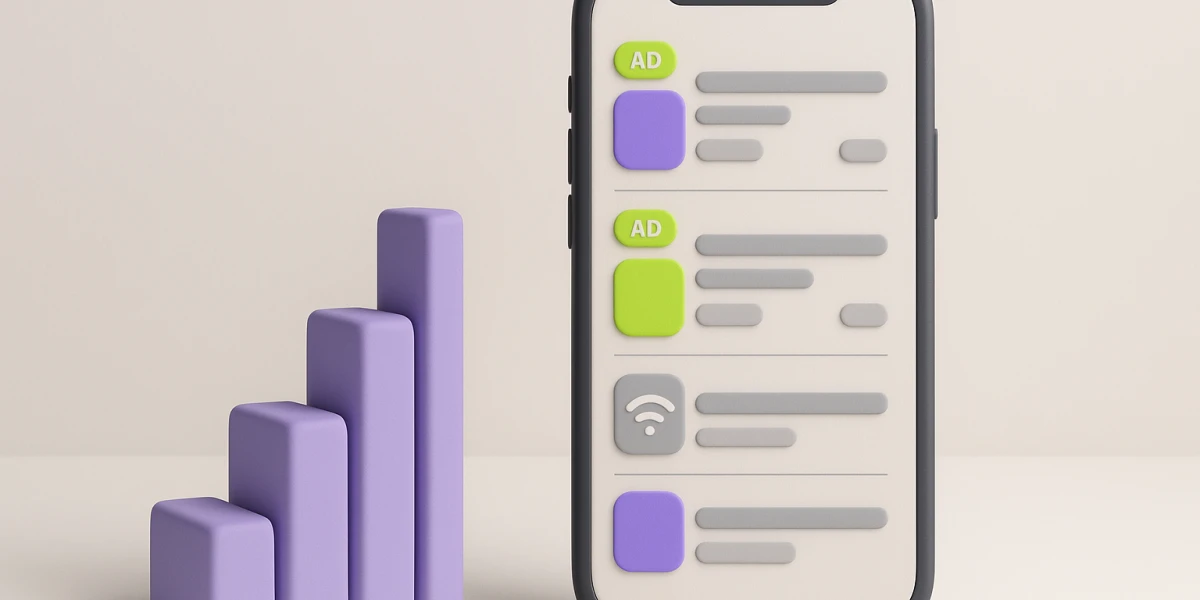
VAR searches in Apple Search Ads: why ambiguous acronyms break targeting (ConsultMyApp)
A credited summary of ConsultMyApp’s small-but-useful case study: in the US App Store, ‘VAR’ demand is real, but the term is ambiguous enough that Apple Search Ads can serve weather apps and a Wi‑Fi analyser. The fix is simple: add context (e.g. ‘football VAR’), then build keywords and negatives around the clearer intent.
-

Apple’s June 2026 App Store updates: Creative Assets, better previews, and more ‘compliance UI’
Apple is pushing App Store pages toward reusable Creative Assets and better previews, while quietly turning age ratings and Time Allowances into real product requirements you need to ship against.
-

AI audience segmentation: stop treating ‘segments’ like static lists
Braze’s guide frames AI audience segmentation as dynamic membership plus activation: one definition that updates in real time and stays consistent across push, in-app, email, and paid suppression.
-

ConsultMyApp: For Apple Ads share of voice, the top 2 ads are not the market (track the top 50)
ConsultMyApp argues that ‘screenshot-level’ Apple Ads monitoring (just the visible 1-2 ads) systematically misreads competitive pressure. Their case is simple: the auction stack is dynamic, lower positions can still deliver impressions, and pushing the unseen tail onto the visible leaders overstates who is really winning.
-

Google Play policy update (July 15, 2026): phone verification via READ_CALL_LOG is out, and app registration is now a hard requirement
Google’s July 15 policy announcement has two practical ‘don’t get removed’ items: (1) you can no longer justify READ_CALL_LOG for account verification via phone call, and (2) you must register your Play apps in Play Console (including apps you distribute outside Play, if you want installs on certified devices). It also clarifies that User Data rules apply to third-party AI integrations.
-

Apple Ads share of voice: why you need the top 50 auction positions (ConsultMyApp)
A credited summary of ConsultMyApp’s argument (and data) that screenshot-based SoV is not market share. The ‘tail’ from auction ranks 3 to 50 is small per app, but big in aggregate, and it is where competitive moves show up first.
-

Braze: The most practical way to adopt AI in CRM is to sequence it by risk, not hype
Braze lays out eight concrete AI use cases across the lifecycle, from behavioural segmentation and send-time optimisation to churn prediction and agentic execution. The useful framing is the adoption order: start with low-risk wins (content variants, timing), then move into data-dependent work (segmentation, prediction), and only then let AI make decisions or take actions.
-

App Store Marketing Weekly – Week 30 (2026)
This week’s theme: treat store exposure and review as ‘production surfaces’. Your listing is now portable across stores, your review path must be testable, and your retention loop should not rely on slow channels.
-

App Store review rejections are rarely ‘random’. They’re usually untestable flows (AppFollow)
AppFollow’s 2026 guide reframes App Review as a verification problem: reviewers reject what they can’t access, can’t validate, or can’t reconcile with metadata. The actionable bit is a pre-submit checklist that treats review like QA, not paperwork.
-

Email is still the archive, push is the heartbeat: a practical migration playbook (OneSignal)
OneSignal’s playbook argues that ‘email-first’ for mobile users often leaves engagement on the table. The useful bits: migrate only your engaged segment first, use a primer before the iOS prompt, and run email + push in parallel until journeys are proven.
-

Google Play says US app listings will be shared with third-party Android app stores (starting July 22, 2026)
A credited summary of Google Play Console Help’s notice that US Play listing assets (name, icon, description, screenshots, videos) will be made available to enrolled third-party US Android app stores. The practical takeaway: your listing becomes a portable promise, and support and trust signals matter more.
-

Apple Ads terms quietly expand the definition of where Apple can run ads
A credited summary of PPC Land’s analysis of Apple’s updated Advertising Services Terms, which removes explicit ‘Apple-owned surfaces’ language from the placement definition. The practical takeaway: treat this as a legal precondition for expansion, and audit your measurement and creative assumptions now.
-

TestFlight (July 7, 2026): you can submit builds made with Xcode 27 beta 3 + the iOS 27 beta 3 SDKs
Apple updated TestFlight submission support so you can now submit builds created with Xcode 27 beta 3 using the iOS 27.0 beta 3 (and related platform) SDKs for internal and external testing.
-

App Store Connect (July 15, 2026): submit IAPs and subscriptions directly with Add for Review
Apple updated the submission flow for In-App Purchases and subscriptions. You can now submit IAPs, subscriptions, subscription groups, and non-renewing subscriptions directly from the In-App Purchases and Subscriptions sections using Add for Review.
-

Google Play (US): your Play listing can be reused by third-party Android app stores (starting July 22, 2026)
Google Play says US app and game listings (name, icon, description, screenshots, video) may be shared with enrolled third-party US Android app stores from July 22, 2026. The practical takeaway: treat your listing like a portable promise, and decide whether to opt out.
-

Apple Ads publishes Maps + News/Stocks policies (July 2026): what’s actually prohibited
Apple’s Advertising Services policies for News/Stocks, Maps, and Sports Programming read like ‘App Store rules, but for ads’. The practical angle: copy quality, substantiation, UI-mimic bans, and a surprisingly specific Maps category exclusion list.
-

Apple Ads guide (2026): placements, structure, and what the costs really look like (SplitMetrics)
A long, benchmark-heavy guide to Apple Ads (formerly Apple Search Ads). The useful bits: four placements behave differently, multiple search ad slots are now normal, and category economics vary wildly.
-

Google Play (US): third-party app stores are about to be installable from the Play Store (MacRumors)
A court injunction is pushing Google to support alternative app stores in the US starting July 22. The practical shift is not sideloading as a niche, it is ‘rival stores’ being distributed inside the Play Store UI, with Google still collecting its service fee.
-

Apple Ads: a subtle Terms change that could hint at third-party inventory (Mobile Dev Memo)
Eric Seufert spots updated Apple Advertising Terms language that appears to grant Apple latitude to place Apple Ads beyond Apple-owned surfaces. If true, it raises a big follow-on question: what does attribution look like when Apple Ads is not just on Apple inventory?
-

Google consent changes (June 2026) make call attribution a measurement trap
A credited summary of Invoca’s breakdown of Google’s June 2026 consent rule change: Ads attribution hinges on ad_storage, which can erase call conversion signals and mis-train Smart Bidding.
-

June 2026 consent change: Google Signals stops being your ‘backdoor’ privacy switch
A credited summary of PPC Land’s explainer on Google’s June 15, 2026 consent change: ad_storage becomes the sole authority for Ads data collection, so ‘Signals off’ is no longer a substitute for a real CMP.
-

Customer.io: retention channel strategy is sequencing, not ‘pick your favourite channel’
A practical argument for coordinated, stage-aware delivery: email for depth, SMS for urgency, in-app for real-time activation, and push for re-engagement.
-

Email open tracking in Europe: why the pixel now needs consent (Courier)
France (CNIL) and Italy (Garante) are treating open-tracking pixels like cookies. Practical implication: keep sending emails, but only fire the pixel when the recipient has opted in.
-

A grounded way to read a noisy category: gambling apps in the UK App Store (ConsultMyApp)
ConsultMyApp analysed UK gambling searches (casino, betting, slots, poker, bingo, lottery) and mapped who wins organic and Apple Search Ads visibility. The meta-lesson: in messy categories, ‘what users actually type’ is the market structure.
-

App Store Marketing Weekly – Week 29 (2026)
This week’s theme: your store listing is becoming a travelling artifact. If it can show up in more places, vague claims and stale creatives turn into support tickets, not just ‘conversion issues’.
-

Retention benchmarks are only useful if they force a product decision (Business of Apps)
Business of Apps collects retention benchmarks by vertical. The actionable takeaway is not ‘what is normal’, it’s where your product loop breaks (and where messaging makes it worse).
-

App Store Marketing Weekly – Week 28 (2026)
This week’s theme: growth teams are being pulled into two new responsibilities: proving lift like finance (incrementality), and keeping your store catalog ‘portable’ without letting it turn into a support mess.
-

4 CRM shifts in 2026: incrementality, zero-party data journeys, and loyalty that changes behaviour
A credited summary of Optimove’s take on four CRM marketing shifts: speaking in incremental lift, designing zero-party data capture as a journey, earning attention fast, and closing the gap between loyalty membership and loyalty behaviour.
-

Google Play (US): your listing can appear in third-party store catalogs (and you must opt out if you don’t want it)
Google Play says US app and game listings (name, icon, description, screenshots, video) may be shared with enrolled third-party US Android app stores starting July 22, 2026. The download still completes through Google Play, but your catalog footprint just got wider.
-

Apple Developer: Hello Developer (July 2026) is a quiet reminder to refresh your dev + design ops
Apple’s July Hello Developer roundup points to a new on-site search tool, updated design kits (Figma/Sketch), and a convenient hub for tracking what changed across the 27 platform releases, docs, sample code, and release notes.
-

Vmobify: a push strategy is a retention system, but the permission moment is the real bottleneck
A detailed push notification strategy guide focused on two hard truths: opt-in is now a product flow (iOS plus Android 13+), and timing/segmentation discipline matters more than ‘send more’.
-

Google Play Terms update (effective July 29, 2026): background data language + subscription charge window
Google’s updated Play Terms (July 29, 2026 version) tightens the language around background data usage and clarifies a 48-hour subscription charge window. It’s not a growth ‘feature’, but it can drive support tickets and renewal expectation mismatches.
-

Fintech benchmarks that matter for app growth teams (Mixpanel’s 2026 digital analytics cut)
Mixpanel’s 2026 finance benchmarks are a useful reminder that ‘growth’ is now a lifecycle argument. Device growth, actions per user, DAU/MAU, and week-one retention often point in different directions, and the gaps tell you what to fix first.
-

App Store Connect age ratings now ask about social media capabilities (Apple Developer News)
A summary of Apple’s new age-rating questions for ‘social media capabilities’, how it affects the Time Allowances Social Media category, and what teams should do before September submissions.
-

The quiet app advantage for publishers: super users, anonymous audiences, and the measurement gap (Pugpig)
A summary of Pugpig’s 2026 Media App Report themes: engagement is up, rich formats create ‘super users’, but anonymous usage and weak measurement block monetisation and retention work.
-
Your screenshots are the funnel (not the decoration): 10 practical ways to make them convert
ConsultMyApp’s checklist is a good gut-punch for anyone treating screenshots as a design task. The punchline: your first three frames have to confirm intent fast, and CPP/CSL variants exist so you do not explain everything to everyone.
-

A quick reality check on App Store privacy labels and ATT: the numbers are still huge (42matters)
42matters keeps a rolling snapshot of App Store privacy label declarations. The useful part is not the exact percentages, it’s the gut-check: how many apps still declare tracking, background location access, and analytics-linked data at scale.
-

Win-back campaigns, but on the web: a practical way to recover churned subscribers (RevenueCat)
RevenueCat’s new win-back campaigns trigger an email when access actually expires (not at cancellation), then route re-subscription to a web checkout so you can discount aggressively without handing 15%–30% to the stores.
-

Google Play: age verification bills turn into product work (Play Age Signals API, Texas SB 2420)
Google Play outlines how Texas’ SB 2420 and similar laws change developer obligations, introducing the Play Age Signals API (beta) plus new Play Console workflows for ‘significant changes’ and parental approval status.
-

Push notifications are still the fastest way to lose trust (or win retention): a practical refresher
Pushwoosh’s explainer is basic on purpose, but it’s a useful operational checklist: permission timing, token hygiene, triggered vs promotional pushes, and the small mechanics that decide whether users mute you.
-

Google Play Terms: subscriptions can be charged 48 hours early (and Google finally spells out background data)
Android Authority highlights Google Play’s updated Terms of Service (effective July 29, 2026), including a new ‘System Services’ section, clearer background mobile data language, and a change that allows subscription renewals to be charged up to 48 hours before the next billing period.
-

Inference cost vs UX: why cheaper AI models can quietly reduce engagement (Amplitude)
Amplitude ran a real production test swapping an agent’s model to cut cost. Conversion held, but latency doubled and people asked fewer questions. The point: your success metric needs to include ‘time-to-answer’ and ‘messages per session’, not just dollars and a top-line conversion proxy.
-

Your iOS attribution strategy in 2026: the uncomfortable ‘prompt gap’ (Kochava)
Kochava’s survey point is blunt: a lot of iOS ‘attribution loss’ is self-inflicted. If you are not prompting (or you ship the raw system ATT prompt with no context), you are choosing to run most of iOS as a black box.
-

DeepClick: Mobile attribution still works post-ATT, but you need to treat iOS as a different data product
A clear, nuts-and-bolts walkthrough of how attribution matches installs to ad clicks, why MMPs matter, and how ATT plus SKAdNetwork turned iOS into aggregated, delayed measurement that needs different expectations (and cleaner inputs).
-

App Store Marketing Weekly – Week 27 (2026)
This week’s theme: retention is not a channel, it’s a system. If your policy, listing promises, and lifecycle messaging aren’t aligned, you’ll spend all week explaining the gap to users.
-

How to choose a customer engagement platform (CEP): what actually matters for mobile retention
A credited summary of Braze’s guide to evaluating a customer engagement platform, focusing on the architecture-level questions that decide whether lifecycle messaging compounds or collapses into spam.
-

Predictive customer analytics: turning churn risk and propensity into usable lifecycle triggers
A credited summary of Braze’s explainer on predictive customer analytics, with a practical lens: which prediction types are useful in apps, and how to avoid ‘export a score, send a blast’ failure.
-

App Store Connect (June 18, 2026): Brazil alternative distribution support, age rating updates, and Intel Mac drop support
Apple’s June 18 App Store Connect notes bundle three ‘quiet but launch-breaking’ changes: alternative distribution/payment option updates (including Brazil support), region-specific age rating shifts (AU/VN), and an official path to drop Intel Macs for universal apps targeting macOS 13+.
-
Google Play policy announcement (Apr 15, 2026): Contacts access, account transfer, and tighter location expectations
A quick summary of Google Play’s April 15 policy announcement, including a new Contacts Permissions policy, a new Account Transfer policy, and updated guidance around location permissions and the Android location button.
-

Apple introduces ‘Time Allowances’ categories (iOS 27): why the new Social Media questionnaire matters for age rating and distribution
Apple is adding Time Allowances categories in iOS 27, including a new Social Media bucket based on ‘social media capabilities’ (not your App Store category). Starting Sept 2026, you will have to answer this in App Store Connect to ship updates or notarise for alternative marketplaces.
-

VAR vs own goal: why short, event-led keywords break App Store search (ConsultMyApp)
A quick, funny APPlyzer snapshot that makes a real point: ambiguous acronyms (VAR) can send both organic results and Apple Ads targeting into the weeds.
-

Apple says the App Store is getting new marketing surfaces: Creative Assets, discovery updates, and more subscription levers
Apple’s June 2026 Newsroom post outlines new App Store marketing surfaces (Creative Assets in product page headers and search results), subscription flexibility, and workflow tweaks in App Store Connect. Treat it as a new creative + measurement problem, not just a shiny UI update.
-

Braze: WWDC 2026 makes ‘app opens’ a worse engagement metric
If users can complete high-value actions via Siri/App Intents, or get price alerts via Safari, your lifecycle program needs to optimise for outcomes (and instrumentation), not sessions.
-

Mixpanel’s three AI surfaces map to three work styles (Mixpanel)
A practical summary of Mixpanel’s guide to choosing between an in-product AI analyst (Agent), an MCP server that brings Mixpanel into ChatGPT/Claude/Cursor, and a Python ‘Headless’ SDK for automation.
-

The 15% app store fee: if you’re under $1M, stop donating margin
A credited summary of RevenueCat’s practical guide to Apple’s Small Business Program and Google Play’s 15% service-fee tier, plus the subscription commission quirks teams still miss.
-

Apple’s monthly subscriptions with a 12-month commitment: a pricing lever, not a miracle
A credited summary of RevenueCat’s take on Apple’s new 12‑month commitment billing plan: where it helps (localization, annual-value buyers with upfront friction) and what to watch (cannibalization, support, payment failures).
-

UK CMA consults on ‘steering’ rules: letting developers link to off-platform payments (and what ‘fair fees’ could mean)
Summary of the CMA’s June 30, 2026 consultation on allowing app developers to steer users to off-platform payment options, plus the related NFC access discussion.
-

Firebase Android SDK (June 16, 2026): BoM 34.15.0, FCM token API deprecations, and new App Check reCAPTCHA
A credited summary of the June 16, 2026 Firebase Android release notes. Most of it is dependency churn, but there are a few things that can surprise app teams: Cloud Messaging token API deprecations, App Distribution auth upgrades, and a new App Check reCAPTCHA SDK.
-

Google Android release notes: Play Games Services v1 is effectively over (final ‘empty’ SDK release)
A credited summary of Google’s June 11, 2026 release note: the Play Games Services v1 SDK has a final, non-functional release intended to force a migration signal. If you still rely on PGS v1, this is your ‘stop punting it’ moment.
-

US distribution shift: Google Play may share your store listing with third-party Android app stores
Google says that for US users, developers can opt out, but otherwise Google Play will begin providing app listing(s) to third-party US Android app stores via the Play Catalog Access program. The operator risk is copy-and-asset drift: your ‘official’ listing content may show up in more places than you expect.
-

Braze: Trigger campaigns beat scheduled blasts, if you build the guardrails
Triggered messages win because they hit right after user intent, but without frequency caps and exception events, you can still annoy (or cannibalise) your own lifecycle flows.
-

App Store Marketing Weekly – Week 26 (2026)
This week’s theme: payments and ratings are not ‘growth hacks’, they’re trust surfaces. Google is modularising Play fees, and Apple is tightening review-prompt enforcement. Treat both as UX you can break (or improve).
-

Google Play splits fees into service + billing, and expands billing choice (June 2026)
A credited summary of Google’s June 2026 update: alternative billing and web link-out programs expand, and fees get separated into a service fee plus an optional billing fee.
-

App Store Connect (June 25, 2026): you can now upload apps built with Xcode 26.6
Apple updated App Store Connect to accept uploads built with Xcode 26.6 (using the iOS 26.5 RC SDK family) for App Store submissions and TestFlight. It’s a small release note, but it’s the kind that unblocks launch timelines.
-

High-impact Custom Product Pages: decide if you’re matching intention or stealing attention (ConsultMyApp)
A skimmable summary of ConsultMyApp’s CPP playbook: CPPs are not ‘more creatives’, they are intent-specific entry points with a clear go/no-go gate (keyword eligibility).
-
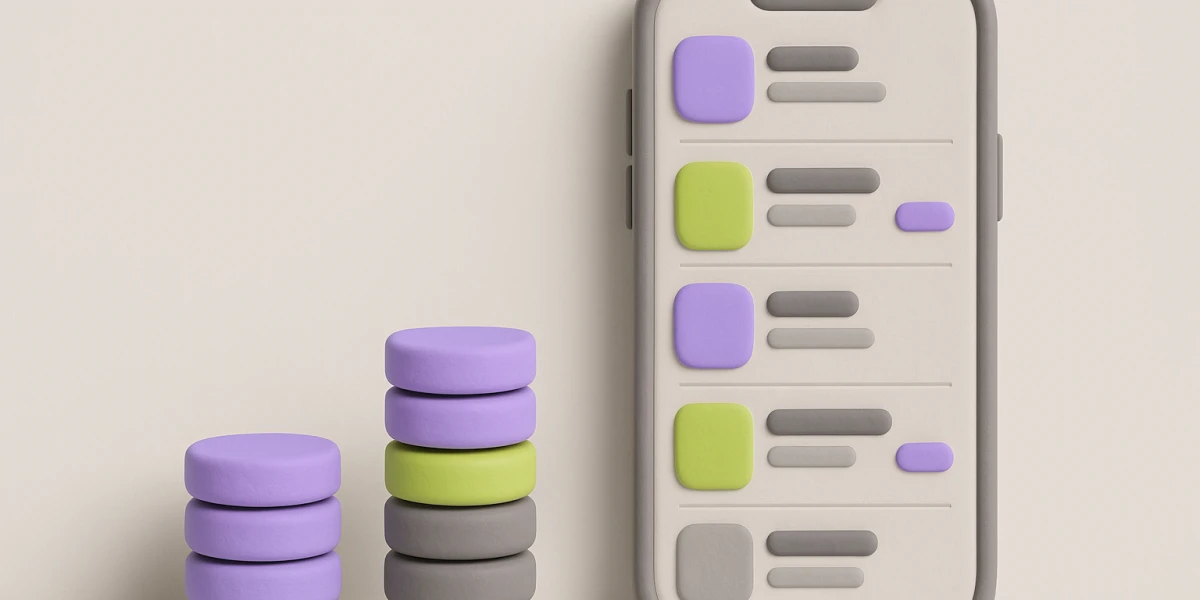
US streaming App Store search is not one market, it’s a pile of intents (ConsultMyApp)
A skimmable summary of ConsultMyApp’s ASA/organic keyword analysis for US streaming searches, where ‘TV streaming’ is clean, but sports, free, and device-utility terms are chaos.
-

Apple updated the Developer Program License Agreement for Brazil, alternative distribution, payments, and out-of-app offers
Apple revised Attachment 12 of the Apple Developer Program License Agreement to spell out Brazil-specific terms for iOS apps, including alternative distribution, alternative payments, out-of-app offers, and the Core Technology Commission. Treat it as launch-risk hygiene: review, accept, and make sure your legal and release checklists reflect the new rails.
-

RevenueCat: move your rating prompt out of onboarding, Apple is rejecting apps for it
RevenueCat flags a new-ish App Review enforcement: asking for App Store ratings during onboarding is being treated as manipulation (Guideline 5.6.3). Move the prompt to a real ‘happy moment’ after meaningful engagement, and treat it as part of your UX and support hygiene, not an ASO hack.
-

Apple’s App Store Connect SDK minimum requirements are now Xcode 26 + iOS 26 (treat this as a release pipeline deadline)
As of Apr 28, 2026, apps uploaded to App Store Connect must be built with Xcode 26 or later, targeting iOS 26 (and equivalent platform SDKs). For teams, this is a CI and dependency timeline, not just a developer machine upgrade.
-

RevenueCat’s Android Codegen plugin turns dashboard strings into compile-time safe entitlements and offerings
RevenueCat ships a Codegen Gradle plugin that fetches your project schema at build time and generates Kotlin accessors for entitlements, offerings, and packages. Fewer runtime nulls, more autocomplete, and less drift between dashboard config and app code.
-

Mobile app experience in 2026: the apps that ask less win (because attention is the bottleneck)
Userpilot argues most mobile UX issues are attention-management issues: value should come before setup, permissions should be requested at the moment of need, and notifications should be behavior-driven instead of schedule-driven.
-

App Store Connect release notes (June 10, 2026): localized Apple-hosted asset packs, 200-pack limit, and Linux tools
Apple’s June 10 App Store Connect notes are mostly ‘plumbing’, but the kind that changes shipping velocity: localized assets for Apple-hosted asset packs, support for up to 200 packs per app, and new Linux tooling for building and testing non-localized packs.
-

Google Play I/O 2026 updates: Play Shorts, Ask Play, Gemini placements, and the Engage SDK (what’s real vs hype)
A quick summary of Google Play’s I/O 2026 distribution updates, what new discovery surfaces imply for intent quality, and how to prepare your listing and onboarding.
-

Mobile app metrics that actually help: Time to First Value, activation triage, and what to cut from your dashboard (Userpilot)
A skimmable summary of Userpilot’s mobile metrics framework, why Time to First Value beats vanity counts, and a simple triage order for early-stage apps.
-

Android 17 Beta 3: photo picker customization and privacy defaults that will show up as UX friction (if you ignore them)
Android 17 reaches platform stability in Beta 3. Buried in the release is a practical UX change: you can now customize the photo picker’s layout to match your app, while keeping the privacy-preserving picker model. At the same time, defaults like certificate transparency and local network protections keep tightening.
-

Apple Ads is adding Creative Assets for Today tab and Search Results ads (fall 2026): what changes for creative workflow
Apple Ads says advertisers will be able to upload their own images and videos as ‘Creative Assets’ for Today tab and Search Results ads. It shifts the constraint from ‘use your product page screenshots’ to ‘design an ad on purpose’, and that will change testing cadence, approvals, and how you map intent to landing experiences.
-

App Store Connect release notes (June 18, 2026): Brazil alternative distribution tweaks, age rating changes, and dropping Intel Mac support
Apple’s June 18 App Store Connect release notes bundle a few quiet but high-impact changes: updates to alternative distribution/payment options (including Brazil support), region-specific age rating shifts (Australia, Vietnam), and the option to ship Apple silicon-only macOS binaries if your minimum version is macOS 13+.
-

Digital News Report 2026: why editions cannot be your growth engine (and what to build in your app instead)
Twipe’s read on the 2026 Reuters Institute Digital News Report is a useful product-and-retention lens for any owned app experience. The headline: direct access and outlet-level trust still matter, but social/video habits are eroding that advantage across all ages. Editions can retain loyal users, but they rarely create growth by themselves.
-
Apple is changing App Store age ratings in Australia and Vietnam: what to check before June 18
Apple says the 15+ rating is being removed in Australia (some 15+ apps will be bumped to 16+), and Vietnam will require a region-specific age rating (00+, 12+, 16+, 18+) based on your questionnaire. It’s a small storefront signal that can create surprise compliance work.
-
Texas age assurance on iOS (SB 2420): what Apple’s June 3 update means for consent, significant changes, and server notifications
Apple says new Apple Accounts in Texas are now subject to SB 2420 age assurance requirements, including parent/guardian consent for downloads, IAP, and significant app changes. If you ship to Texas, this is now funnel plumbing: eligibility, consent, and revocation handling.
-
Apple expands App Store capabilities (Creative Assets, subscription upgrades, and faster submissions): what app teams should do next
Apple’s June 8 Newsroom update rounds up 2026 App Store changes like Creative Assets in the product page header and search results, new subscription features, and a tighter submission workflow. The practical lesson: creative ops and experimentation are moving into App Store Connect.
-

WWDC26’s App Store creative refresh: why your listing is turning into a living campaign
M+C Saatchi Performance argues Apple’s WWDC26 App Store changes (Creative Assets, Asset Library, and more personalised recommendations) move teams from ‘set-and-forget’ metadata toward ongoing creative and behavioural optimisation.
-

WWDC26 App Store guide: new creative surfaces, Asset Library, and ‘Retention Messaging’ in App Store Connect
Apple’s WWDC26 App Store guide is a sneak peek at how distribution is becoming a creative workflow (Asset Library, preview tooling) and how churn is becoming a storefront surface (Retention Messaging at cancellation).
-

IDFA in 2026: where it still works, and what you need when it doesn’t
Branch’s refresher on IDFA post-ATT, with a pragmatic message: use deterministic IDFA when you have consent, but plan measurement around SKAdNetwork coverage and a unified view across both.
-

Apple is moving Sign in with Apple and Hide My Email to private.icloud.com (June 2026)
Apple will issue new Sign in with Apple relay addresses and iCloud+ Hide My Email addresses on private.icloud.com. Here’s what to update so logins, email validation, and deliverability don’t break silently.
-

Google Play policy announcement (April 15, 2026): contacts access, account transfers, and tighter location defaults
A skimmable summary of Google Play’s April 15, 2026 policy announcement, focused on what will trip releases: contacts access expectations, account transfer workflow, and location permission scope.
-

Updated Play policies: Contact Picker, location button, and account transfer workflow (Android Developers Blog)
A skimmable summary of Google’s Android Developers Blog post tying Play policy changes to concrete platform features (Contact Picker, location button) plus the new account transfer workflow.
-

App Store Marketing Weekly – Week 25 (2026)
This week’s theme: permission UX and auction UX are both funnel surfaces now. If you treat policies as paperwork and ads as ‘just bids’, you ship friction you cannot measure until reviews or CPCs punish you.
-

How Apple Ads auctions actually work: relevance gates, then bids reshuffle (ConsultMyApp)
A skimmable summary of ConsultMyApp’s Apple Ads auction analysis: semantic relevance seems to gate eligibility, but bid and predicted performance do most of the ordering once you are in.
-

ConsultMyApp: UK finance Apple Ads winners (Monzo leads banking, investing dominates ISA intent)
A credited summary of ConsultMyApp’s Apple Search Ads benchmark across 40 UK finance keywords. The key takeaway: ‘Finance’ is a bundle of intent pools, and paid share-of-voice can diverge sharply from organic rankings (Starling vs Monzo/Zopa is the clearest example).
-

Apple: age ratings are changing in Australia and Vietnam (June 18, 2026)
A short, practical summary of Apple’s June 18 age-rating updates in Australia and Vietnam, and why it can create surprise review or support issues if your questionnaire answers are stale.
-

Appcues: Customer retention software in 2026 (the stack is seven categories, not one tool)
A credited summary of Appcues’ 2026 guide to retention tooling, broken into categories like in-app engagement, lifecycle messaging, helpdesk, loyalty, and CRM.
-

Coda: Google Play fee changes after Epic settlement, link-outs, and a Registered App Stores program (rolling out from June 30, 2026)
A vendor-written but useful cheat sheet on Google’s announced Play fee structure changes: tiered service fees, a separate billing fee in some regions, link-out rules (24h window), and an easier install flow for approved third-party app stores.
-

RevenueCat: Android subscription conversion is mostly a ‘trial start’ problem, not a ‘trial to paid’ problem
RevenueCat’s dataset suggests Android and iOS trial-to-paid conversion is basically identical. The gap is that far fewer Android users ever start a trial. Fix the first-session funnel entrance and Play offer configuration before you touch trial length.
-

RevenueCat: Apple is rejecting ‘toggle paywalls’ (trial on/off switches) under 3.1.2
The trial-toggle pattern is being rejected as ‘confusing’ under App Review Guideline 3.1.2. If you used it, move to explicit plan selection (trial is a plan attribute), not a hidden mechanic.
-

Deferred deep linking after Firebase Dynamic Links: what actually needs rebuilding
A credited summary of Messageflow’s guide on replacing Firebase Dynamic Links post-shutdown: use platform-native Universal Links/App Links as the foundation, add a branded routing layer, and measure deferred deep linking as a funnel (click → install → first open with context), not as a click count.
-

Apple expands App Store capabilities: Creative Assets, subscription tools, and faster submissions
Apple outlined new App Store marketing and submission features, including Creative Assets in the product page header and search results. Here’s the practical ‘what to do next’ summary.
-

Apple updates the Developer Program License Agreement and App Review Guidelines (June 2026)
Apple revised key sections of the Developer Program License Agreement and App Review Guidelines. Here’s what changed at a practical level, and what to sanity-check so reviews and releases don’t get surprised.
-

US streaming App Store search wars: why ‘TV streaming’ is the clean front door (ConsultMyApp)
A skimmable summary of ConsultMyApp’s US streaming keyword + Apple Ads stack analysis, including where intent is clean vs chaotic (free movies, sports, kids, and anime).
-

App Store Marketing Weekly – Week 24 (2026)
This week’s theme: the store is adding new creative surfaces at the same time the rules tighten. The compounding move is to treat every new surface as a promise + a measurement plan, not as extra space to fill.
-

Google: June 2026 Android Drop (safety signals, faster sharing, and AI helpers in everyday surfaces)
A credited summary of Google’s June 2026 Android feature drop. The growth takeaway: platform-level safety and sharing features become funnel surfaces, they change user expectations and can quietly affect support load and reviews.
-
Google Play at I/O 2026: more surfaces, more AI tooling, and a bigger ‘trust tax’
A credited summary of Google’s I/O 2026 Google Play update, focused on what changes the day-to-day: new discovery surfaces, Play Console ‘agentic’ workflows, reporting that shifts how you read performance, and the safety tooling that now affects revenue.
-

iOS attribution in 2026: what ATT actually broke (and what still works)
A credited summary of Attriqs’ practical guide to attribution after ATT: why click-level truth is gone for most iOS users, how to think about SKAN vs AdAttributionKit, and the resilient stack (first-party + server-side + incrementality).
-

Android Developers: Android 17 will enforce app memory limits, so treat memory like a launch blocker
Android 17 will start enforcing per-app memory limits based on device RAM, and if you blow past them the system can kill your process without a stack trace. The practical play: shrink bytecode with R8, fix bitmap bloat, and add field signals so you can spot memory-limiter exits.
-

Android Studio I/O Edition: developer verification signals are moving into the editor
A credited summary of Google’s Android Studio I/O Edition update, with the growth-team takeaway: verification and distribution readiness are becoming build-time checks, not launch-day surprises (notably ahead of the September 2026 requirement for certified Android devices).
-

Apple Developer: WWDC26 is one week away (what app teams should sanity-check before the churn)
A credited summary of Apple’s June 1 WWDC26 reminder, plus a practical ‘pre-WWDC checklist’ for growth teams: what usually shifts (store rules, toolchain, App Store Connect quirks) and what to review before launch plans lock.
-

ConsultMyApp: UK retail App Store search wars (AliExpress owns the front door, Very shows up everywhere)
A credited summary of ConsultMyApp’s UK retail Apple Ads analysis across generic, non-brand shopping intent. The big point: ‘retail app’ is basically irrelevant, intent clusters behave wildly differently, and the winners are the ones who understand where the auction is actually retail-relevant.
-

Apple says the App Store ecosystem hit $1.4T in 2025 (and claims 90%+ was commission-free)
A credited summary of Apple’s App Store ecosystem press release and the linked Analysis Group study. The useful lens for marketers: Apple is framing the store as an AI-powered commerce engine, with most value in physical goods and services that do not pay Apple commission.
-
UK retail Apple Ads: the App Store search wars (whitepaper + key takeaways)
A quick, skimmable summary of ConsultMyApp’s UK retail Apple Ads whitepaper, with the charts, the ‘intent not category’ lesson, and a simple workflow you can steal.
-

Apple Developer: Texas App Store age assurance (Declared Age Range + PermissionKit Significant Change)
A credited summary of Apple’s June 2026 update: new Apple Accounts in Texas now fall under SB 2420 age assurance rules, which adds declared age ranges, parent/guardian consent for minors, and a ‘significant change’ consent flow apps need to implement.
-

TechCrunch: Apple fixes iPhone bug that retained ‘deleted’ notification content
A credited summary of TechCrunch’s April 2026 report: iOS cached notification content in a way that could retain messages marked for deletion. Apple shipped a fix, which is a good reminder for app teams that lock-screen copy is part of your privacy model.
-

Apple Newsroom: App Store fraud stats (2025) are a reminder that ‘trust’ is a growth lever
Apple says it blocked $2.2B in potentially fraudulent transactions in 2025 and filtered 195M fake ratings and reviews. The takeaway for teams: reviews, account hygiene, and refund prevention are funnel mechanics, not PR.
-

Apple Developer: Apple Design Award winners 2026 are a high-signal swipe file for ‘proof moments’
The 2026 winners are a practical reminder: delight is usually a product decision (clarity, feedback, pacing), not a marketing slogan. Use these apps as references for onboarding and screenshot promises.
-

Apple is opening a Developer Center in Berlin: why this matters for European app teams
Apple says it will open a new Apple Developer Center in Berlin later this year. For EU-based app teams, it is a practical signal: more in-person labs, clearer platform guidance, and fewer ‘guess-and-submit’ release cycles.
-

Google Play: Q1 2026 updates add new discovery surfaces (Shorts, Ask Play) and more payment recovery
Google highlights Play Shorts, deeper Gemini Q&A, review search, subscription recovery extensions, and more granular Play Console reporting. Treat it as a reminder that store UX changes can move your funnel without a single bid change.
-

Apple Developer: iOS 26.5.1 and macOS 26.5.1 are out (June 1, 2026)
A credited summary of Apple’s June 1, 2026 releases drop (iOS 26.5.1 and macOS 26.5.1). The practical takeaway for app teams: update your QA matrix, sanity-check critical flows, and avoid learning about regressions from your reviews.
-
Google Play: Developer Program Policy update (effective May 27, 2026)
A credited summary of Google Play’s May 27, 2026 Developer Program Policy update, with a focus on the operational bits that can quietly block releases (especially child safety standards for Social and Dating apps).
-

App Store Marketing Weekly – Week 23 (2026)
This week’s theme: surfaces multiply faster than your team can learn. From ‘always-on’ in-app banners to storefront conversion benchmarks, the win is choosing one surface per intent and measuring the downstream effect.
-

Braze Banners: the ‘always-on’ in-app surface that changes your CRM playbook
A credited summary of Braze’s Banners announcement, with practical guidance for app teams: where banners fit vs in-app messages and content cards, and what to watch so ‘more surfaces’ doesn’t become ‘more noise’.
-

App Store conversion rate benchmarks (2026): what to compare, and what to fix first
A credited summary of ScreenFast’s 2026 App Store conversion benchmarks, with a practical lens: use category benchmarks (not universal averages), and treat screenshot clarity as the first lever before you ‘do more ASO’.
-

RevenueCat: 20% of churned users come back, but only if you’re set up to catch them
A credited summary of RevenueCat’s May 28, 2026 post on reactivation: why ‘win-back’ only works when the user’s problem returns, what reactivation rates look like by subscription length, category, and price point, and the foundation checks to run before you build a churned-user pipeline.
-

Unstar: 2026 retention benchmarks by category (D1, D7, D30 medians)
A credited summary of Unstar’s May 11, 2026 retention benchmarks post: median D1/D7/D30 by category, the most common early churn failure modes, and a simple way to use benchmarks without turning them into vanity targets.
-

Braze: a practical CRM playbook hiding inside a ‘Marketer of the Month’ interview (Chopt Rewards)
A credited summary of Braze’s May 2026 Bonfire Marketer of the Month interview with Alison LaGatta (Founders Table/Chopt): cohort-first lifecycle planning, in-store sign-up as a CRM unlock, and why ‘owned’ only works when you can execute the whole loop.
-

FunnelFox: in the EU, Apple fees are now a configuration problem (not a single commission rate)
A credited summary of FunnelFox’s April 2026 breakdown of Apple’s post-DMA EU fee stack: why ‘external payments’ don’t equal ‘no Apple tax’, and what changes for forecasting, attribution, and experimentation when monetization becomes region-fragmented.
-

Apple ships iOS 26.6 beta (and friends): why release engineering still breaks launches
A credited summary of Apple Developer News (May 26, 2026) announcing iOS 26.6 / iPadOS 26.6 / macOS 26.6 betas. Not a ‘growth’ post, but a reminder that tooling and OS cadence can silently become your biggest go-live risk.
-

RevenueCat Sub Club: 68% trial conversion came from trust, not paywall tweaks (Natal App)
A credited summary of RevenueCat’s Sub Club write-up (May 27, 2026) on Natal App: how answering every message for years built enough trust that users convert without needing a ‘test drive’, and why HSA/FSA payments are an underused growth lever for health apps.
-
Apple previews new accessibility features powered by Apple Intelligence: why it matters for UX, onboarding, and content
A credited summary of Apple’s May 2026 accessibility preview, including generated subtitles and richer VoiceOver descriptions, plus practical implications for app UX and marketing promises.
-

Why youth-sensitive app environments are becoming a real compliance problem for advertisers
Mike Rhodes argues that as programmatic buying gets more automated and more fragmented, suitability risk moves from ‘the edge cases’ into mainstream mobile inventory. The practical answer is app-level governance: clear thresholds, repeatable scoring, and auditable Accept/Refer/Decline decisions.
-

RevenueCat AI Toolkit: putting subscriptions setup inside coding agents
A credited summary of RevenueCat’s launch of the AI Toolkit (May 22, 2026), a plugin + skills bundle that brings RevenueCat setup, SDK integration, and paywall troubleshooting into tools like Claude Code, Codex, Gemini CLI, and VS Code.
-

App Store Connect (May 5, 2026): you can now upload apps built with Xcode 26.5 RC
Apple updated App Store Connect to accept uploads built with Xcode 26.5 RC (and the 26.5 RC SDKs) for App Store submissions and TestFlight testing. It’s a small line item, but it’s the kind that silently unblocks launch timelines.
-

App Store Marketing Weekly – Week 22 (2026)
This week’s theme: intent is only real if you can measure it. CPPs and ‘free’ ASO tooling both promise better relevance, but Apple’s new proceeds-per-download benchmarks are the reminder to follow the chain all the way to money.
-

Google Play Billing Library v9: the small API changes, and the bigger Play discovery shift
A credited summary of RevenueCat’s breakdown of Play Billing Library 9.0 (May 19, 2026) plus the I/O-era Play changes around Gemini discovery, Ask Play, Play Shorts, and churn-reducing billing mechanics.
-

Braze April 30, 2026 release: rate limits, multi-language messaging, and better Canvas guardrails
A credited summary of Braze’s April 30, 2026 release notes, focusing on the parts that change day-to-day lifecycle operations: workspace messaging rate limits, multi-language messages, delivery validation behaviors, and tighter Canvas orchestration.
-

Android at Google I/O 2026: the themes that matter for shipping, UX, and distribution
A credited summary of Android Developers’ ‘17 Things to know’ recap from Google I/O 2026, focused on what changes app shipping velocity, UI expectations, and platform surfaces (not just developer hype).
-

Play policies are turning into product work (contacts picker, location button, and account transfers)
A credited summary of the Android Developers Blog post on updated Play policies, focused on the concrete implementation changes that reduce review risk and user friction.
-

Push notifications: the retention lever that also burns trust (a practical 2026 refresher)
A credited summary of MessageFlow’s push notification guide, with a focus on token hygiene, permission timing, and the mistakes that quietly turn retention into churn.
-

FSFE says Apple is still blocking DMA interoperability in practice (56 requests, no solutions yet)
A credited summary of FSFE’s April 2026 report arguing Apple’s request-based DMA interoperability process is producing lots of paperwork and very little actual access. The practical takeaway for app teams: expect platform capability access to remain uneven, and plan for compliance and distribution strategy to vary by region.
-

Apple vs Epic: the Supreme Court declines to pause the contempt order (why app teams should care)
A credited summary of SCOTUSblog’s May 6, 2026 note that Justice Kagan denied Apple’s request to pause a contempt order in the Apple vs Epic dispute. Practical takeaway: external payments and steering rules are still moving, and ‘link out’ UX plus commissions can become a legal battleground, not just a product decision.
-

Apple Design Award finalists 2026: a useful swipe file for onboarding, motion, and ‘proof moment’ UI
A credited summary of Apple’s 2026 Apple Design Award finalists list, and how to use it as a practical reference library for UI clarity, feedback, and first-session ‘proof moments’ (not just vibes).
-

Google System Services (May 2026): the Play changes you feel before you can name them
A credited summary of Google’s May 2026 System Services release notes (Play services v26.19 + Play Store v51.5), focused on what app teams should watch: AppFunctions groundwork, credential manager expansion, and new Store discovery surfaces like Play Collections.
-

Brazil looks next for alternative iOS app marketplaces: iOS 26.5 adds a ‘default marketplace’ setting
A credited summary of 9to5Mac’s report that iOS 26.5 introduces an ‘App Installation’ setting for Brazilian users, suggesting Apple is preparing a marketplace-based model (not just web distribution). The practical implication: discovery, trust, and measurement may fragment beyond the EU.
-

App Store Marketing Weekly – Week 21 (2026)
This week’s theme: stop debating retention in the abstract. Benchmarks (and definitions) turn ‘churn feels high’ into an actionable diagnosis, and they force the right question: did users reach the proof moment you promised?
-

Top 5 things to look for in an app marketing agency (so you don’t buy a channel, and call it strategy)
A credited summary of ConsultMyApp’s checklist for picking an app marketing agency: start with the constraint, think full-funnel (not channel-first), use intent and psychology for store conversion, and treat retention plus martech as part of acquisition efficiency.
-

Apple fixed a bug where deleted notifications could be retained on-device (iOS 26.4.2)
A credited summary of Apple’s April 22, 2026 security note for iOS 26.4.2: notifications marked for deletion could be unexpectedly retained on the device. Practical takeaway for app teams: treat notifications as a privacy and trust surface, and keep lock screen content minimal.
-

App Store Connect Analytics got better in 2026, but it still won’t answer your monetization ‘why’
A credited summary of FunnelFox’s breakdown of what App Store analytics is good for (visibility, installs, high-level subs) versus what remains structurally hidden post-ATT: attribution, creative-level revenue, and the steps between install and subscription.
-

Apple’s Developer app gets a Liquid Glass refresh ahead of WWDC26 (and why that still matters)
Not a growth feature, but a useful signal: Apple is polishing the ‘developer surface area’ again. If you rely on WWDC sessions and labs, make sure your team’s workflow is ready before June 8.
-

WWDC26 (June 8 to 12, 2026): why app growth teams should care
WWDC is ‘dev news’, but it’s also a growth calendar event. New UI defaults, policy shifts, and tooling changes show up as conversion friction (or opportunity) within weeks.
-

What is an app marketing agency (in 2026 terms), and what should it actually do?
A solid reminder that the best ‘app marketing’ isn’t installs-only. It’s a joined-up system across storefront discovery, onboarding, lifecycle CRM, creative testing, and analytics.
-

Google outlines Android’s 2026 security and privacy roadmap (banking scam calls, threat detection, theft protections)
Google’s Android Security and Privacy team previews 2026 platform protections: verified financial calls to stop spoofed bank scams, expanded on-device threat detection, tighter Advanced Protection, and stronger device theft defenses.
-

Mother’s Day Apple Search Ads (US, iOS): who bought the moment, and what their creatives reveal
APPlyzer-backed Mother’s Day snapshot for the US App Store: the organic winners across cards and photo intent, the Apple Search Ads advertisers who showed up on peak seasonal queries, and the Custom Product Page patterns that worked.
-

The post-purchase screen: the fastest place to fight Day 0 trial cancellations
RevenueCat argues that many ‘trial churn’ problems are really ‘post-purchase’ problems. A simple confirmation, reassurance, and one clear next step can stop users from cancelling before they even experience value.
-

Apple warns of South Korea App Store price equalization updates (and a Latvia VAT edge case)
Apple Developer News says App Store pricing will update for South Korea from May 28 (unless it’s your base storefront), and notes a Latvia VAT increase tied to the ‘Content is in Russian’ tax category.
-

App Store Marketing Weekly – Week 20 (2026)
This week’s theme: relevance and proof are becoming inseparable. More Apple Ads inventory and screenshot craft both push teams toward the same question: can a user understand the promise and see evidence in 5 seconds?
-

Apple will add more search ads in App Store search results (2026 rollout)
Search Engine Land reports Apple will add additional inline ad placements inside search results in 2026, with relevance gating who even enters the auction, not just bid size.
-

App Store screenshot guidelines (2026): the practical rules that actually trip teams up
A timely refresher on App Store screenshot basics, plus the real gotchas: localisation, device previews, and making ‘proof’ visible in screenshot #1.
-

Rave sues Apple over App Store removal: a reminder that ‘platform competition’ risk is real
A plain-English summary of Rave’s antitrust claims around an App Store removal, and what it means for distribution risk, review resilience, and product roadmaps.
-

Android 17’s Contact Picker: a privacy-first replacement for broad contacts permission
Android’s new Contact Picker lets apps request only the specific contact fields a user selects, helping teams avoid READ_CONTACTS for common invite/share flows.
-

Google Play’s ‘safer apps’ push: more pre-checks, more guidance, and stronger signing
Google shared a 2026 look-ahead for making it easier to publish safer apps, including earlier policy issue detection and support for post-quantum cryptography in Play App Signing.
-

Apple now requires a Brazilian betting license for fixed-odds gambling apps in the Brazil App Store
Apple Developer News says fixed-odds betting apps can be distributed in Brazil, but only if you provide a valid SPA license during a new version submission.
-

SORA’s Android debut: what the early Google Play surge signals (and what to copy)
ConsultMyApp uses APPlyzer data to map SORA’s fast climb in Google Play Social, plus the classic launch signals behind it: brand demand, coherent creatives, and a crisp ‘what is this?’ promise.
-

App Monetization Seoul recap: the ‘two levers’ mental model for ads, plus what subscription data actually says
A short event recap from RevenueCat. The sharp takeaway: ad monetization is a balancing act between eCPM and impressions, and subscription folklore is best replaced with benchmark reality.
-

AI-generated UGC ads: why ‘replication’ beats reinvention (and where trust breaks)
A credited summary of a RevenueCat guest piece from Mojo on using AI to scale creator-style ads: why dubbing a real winner can outperform new creators, why most avatars fail, and how to keep ‘UGC trust’ intact.
-

Google Play Billing v8 migration: what actually changes (and what to fix before v9)
A credited summary of RevenueCat’s practical migration guide for Play Billing Library v8: what APIs changed, what teams commonly miss, and how to avoid a last-minute scramble when v9 lands.
-

App retention benchmarks in 2026: the curve is brutal, so design for Day 1 activation and Day 7 habit
Enable3’s benchmarks recap is a useful gut-check: across apps, Day 1 retention is roughly 25 to 30%, Day 7 is 10 to 15%, and Day 30 is 5 to 7%. The actionable bit is not the numbers, it’s what they imply about activation speed, habit cues, and what ‘good’ means by category.
-

Retention in 2026: build habit loops, not feature lists (17 engagement tactics, filtered)
StriveCloud’s long list of engagement tactics is salesy, but still useful as a checklist. The real value is the recurring pattern: shorten time-to-value, use behavior triggers over blasts, reduce permission friction, and treat deep links as conversion infrastructure.
-

Supreme Court lets Apple’s Epic contempt order stand, the real fight is what ‘external links’ cost developers
The U.S. Supreme Court declined to pause the order holding Apple in contempt in the Epic case. That keeps pressure on a core App Store question: if apps can link out to pay elsewhere, what commission (if any) can Apple still charge on those purchases?
-

Onboarding is not a tour, it is a path to the first win (26 examples worth stealing)
Appcues’ roundup is less about copycat flows and more about patterns: personalize early, shorten time to value, make progress visible, and let experienced users skip the fluff. It’s a useful checklist for any activation-focused team.
-

Braze adds a Messaging Diagnostics dashboard (and a few ‘ops’ upgrades that reduce campaign pain)
Braze’s March 5, 2026 release is mostly ‘plumbing’, but it’s the kind that saves teams from silent delivery failures: a new Messaging Diagnostics dashboard, better CSV import validation, and clearer multichannel rate limiting.
-

App Store Connect adds 11 new metadata languages (localization just got less ‘enterprise-only’)
Apple added support for 11 additional App Store metadata languages in App Store Connect, making it easier to ship localized listings without awkward workarounds or waiting for major tooling changes.
-

TestFlight 4.2 adds 11 new languages and ships accessibility fixes (a quiet win for global betas)
Apple’s TestFlight 4.2 update expands iPhone/iPad language support across 11 additional locales and includes accessibility improvements (VoiceOver, Voice Control, Larger Text) plus stability fixes.
-

Mobile app retention is a systems problem: onboarding, prompts, habits, and support loops
Userpilot’s retention guide is a useful reminder that retention rarely hinges on one ‘clever’ push. The durable wins come from getting onboarding to value, behavior-based nudges, habit loops, feedback, and support right.
-

Google System updates (May 2026): Play Store v51.3 adds Sidekick access and expands community Q&A languages
May 2026 Google System release notes include Play Store v51.3 and Play services v26.17. The changes are small, but they touch areas that can leak into user trust, discovery, and support: notification drawer surfaces, in-store community content, and desktop sign-in warnings.
-

Apple Developer releases (May 4, 2026): Xcode 26.5 RC and iOS 26.5 RC are here
Apple posted the 26.5 release candidates across Xcode and the OS lineup. Even if you are not shipping platform features, RC week is when build, signing, and CI toolchain problems surface. Treat it like a launch readiness checkpoint, not a developer curiosity.
-

App Store Marketing Weekly – Week 19 (2026)
This week’s theme: workflow changes are growth changes. Localization support and TestFlight updates look ‘operational’, but they directly affect how fast you learn, how global your testing can be, and how reliably you ship the promise you sell.
-

Android Developers: Play is pushing contact picker, location button, and a real account transfer flow
Google’s Android Developers blog frames the April 2026 Play policy changes as ‘clearer choice’ plus business protection. The practical bits: move invites/sharing off READ_CONTACTS and onto Contact Picker/Sharesheet, use the location button for one-off precise location, and plan for an official account ownership transfer workflow with a cooldown.
-

EFF: push notifications can leak more than you think (lock screen, cloud routing, device databases)
EFF breaks down two privacy leak points for push notifications: what platforms can see in transit (content/metadata), and what can persist on-device (including recovered ‘deleted’ notifications). For app teams, the takeaway is simple: treat notifications as a public surface and design for minimised content.
-

Google Play policy update (Apr 15, 2026): contacts access, account transfers, location, health data
Google Play’s April 15 policy announcement adds a new Contacts Permissions policy, formalises developer account transfers, and tightens expectations around location and sensitive health data. Here’s what changes, what’s just clarified, and what to sanity-check this week.
-

RevenueCat Charts v3 is a data pipeline rebuild, not a UI refresh (real-time charts, more stable history)
RevenueCat rebuilt its analytics infrastructure and is rolling out Charts v3: near real-time chart updates, cleaner subscription modeling across stores, and reporting changes like refunds no longer rewriting historic periods.
-

RevenueCat Paywall Rules let one paywall behave like many (show or hide components based on offers and variables)
RevenueCat introduced Paywall Rules: logic that can hide or override paywall components depending on the selected package’s offer type, a package identifier, or custom variables.
-

Purchasely: 10 mobile UX mistakes that make users quit (2026 edition)
A credited summary of Purchasely’s 2026 playbook on onboarding and core-flow UX mistakes that drive churn, plus a simple way to turn ‘best practices’ into a test plan.
-

Reteno: push best practices for 2026 (fewer blasts, more earned moments)
A credited summary of Reteno’s 2026 push notification guide, with the practical bits: opt-in timing, segmentation, frequency caps, and copy that earns the tap.
-

Apple: Monthly subscriptions with a 12-month commitment
Apple is adding a new subscription billing option: monthly payments with a 12-month commitment. It’s designed to lower the upfront price while keeping a ‘commitment’ frame, and it changes how you should message cancellation, renewal reminders, and value delivery in the first month.
-

Epic v Apple: stay reversed, App Store external payments rules back in play
The Ninth Circuit reversed a stay that had paused enforcement while Apple pursues another Supreme Court appeal in Epic v Apple. Practically, this pulls App Store ‘external purchase’ rules and fees back into the spotlight again, and teams should be ready for link-out UX and commission policy changes.
-

ConsultMyApp: AI app visibility is a signal, not a growth channel (yet)
ConsultMyApp analysed 60 iOS apps using APPlyzer’s AI Visibility Index (GPT 5.5 scoring). The takeaway: AI visibility correlates with store success, but it’s not strong enough to replace ASO, paid, brand demand, or conversion work. The real value is using prompt and intent scores as a diagnostic layer.
-

Growth-onomics retention benchmarks (2026): why Day 30 is a category problem, not a dashboard number
A credited summary of Growth-onomics’ 2026 retention benchmarks by industry, plus the practical way to use Day 1, Day 7, and Day 30 as diagnosis, not targets.
-

Google System updates (April 2026): small Play Store changes that can quietly impact conversion
April 2026 Google System release notes include Play Store v51.2 and recent v51.0 tweaks: a large-screen badge, a new content-rating view, changes to inline install deep links, and the ability to give feedback on AI-generated review summaries. None are ‘big launches’, but they can change what users see (and do) on your store listing.
-

EU Commission (DMA): draft measures to force Android interoperability, with a clear focus on AI services
The European Commission has issued preliminary findings and draft measures telling Google what it should implement to ensure effective access and interoperability with key Android capabilities, explicitly framed around giving users more choice of AI services. There’s now a public consultation open until May 13, 2026.
-

App Store Marketing Weekly – Week 18 (2026)
This week’s theme: the lock screen is a product surface. Push, permissions, and platform policy now change retention and conversion as much as creatives do, because they shape what users see (and what they fear) before they ever open the app.
-

Mental health is no longer a rising tide category, it is an intent-matching game (and CPPs are the lever)
ConsultMyApp argues that US iPhone demand proxies for several core mental health terms have softened since 2024, while Apple Search Ads competition remains intense. The practical response is tighter intent segmentation and Custom Product Pages that prove the right thing after the tap.
-

Choosing a push platform in 2026: treat delivery, consent, and experimentation as one system
SashiDo’s 2026 guide is essentially a retention-team buyer checklist: reliable delivery and token hygiene, deep segmentation, journey automation with caps, and experimentation/holdouts that let you prove impact without drowning users in notifications.
-

Android Gradle plugin 9.2.0 (April 2026): unified reports + R8 rule changes
AGP 9.2.0 adds an experimental unified HTML dashboard for test and coverage reporting, and ships R8 rule changes that can quietly affect builds (stricter -keepattributes wildcard behavior, plus support for negated member name patterns).
-

Apple releases: iOS 26.4.2 + iOS 18.7.8 (notifications database fix)
Apple’s April 22 releases (iOS 26.4.2 and iOS 18.7.8) are a reminder that platform ‘bugfix’ updates can have direct privacy implications. In this case, it appears to close a hole where deleted notifications could persist in the on-device notification database.
-

EFF: Push notifications can betray your privacy (and what to do about it)
EFF’s practical point is simple: notifications leak in two places, in transit (Apple/Google push infrastructure) and at rest (what your OS stores locally). Their advice is to reduce preview content, tighten per-app and OS-wide settings, and treat notification copy like sensitive data.
-

OneSignal: your notification tray is a brutally honest engagement dashboard
A credited summary of OneSignal’s Apr 17, 2026 piece on running a ‘notification center audit’, using a real device and a 48-hour backlog to spot noisy automation, channel duplication, and stale triggers that quietly train users to mute you.
-

Pushwoosh: 12 push notification formats, and the trigger that makes each one work
A credited summary of Pushwoosh’s Apr 17, 2026 guide to push notifications, with a practical lifecycle map (onboarding, transactional, re-engagement, ratings, social) so teams stop defaulting to ‘promo blasts’.
-

Retention Edge: automated push notifications are the highest-ROI messages because they run on autopilot
A credited summary of Retention Edge’s Apr 17, 2026 post on why push works best when it’s event-triggered (welcome, cart, back-in-stock, re-engagement), and why ‘setup once, earn forever’ is the real advantage.
-

Apple: Hello Developer (April 2026)
Apple’s April Hello Developer edition is a useful pulse check: WWDC prep, a Swift concurrency deep dive, new SwiftUI sample code, and more ‘Liquid Glass’ design references. Not a single growth hack, but lots of signal on what Apple wants teams to prioritize.
-

Apple: TestFlight update (April 14, 2026)
Apple’s April 14 TestFlight update is another toolchain gate: TestFlight now accepts builds made with Xcode 26.5 beta 2 and the matching beta SDKs. If you ship on a tight cadence, this is the sort of ‘small’ change that can block a release if your CI image lags.
-

Android 17 Beta 4: the ‘boring’ changes that become support tickets
Android 17 Beta 4 is the last scheduled beta, and the headline for app teams is not one feature, it is a bundle of default-tightening changes: local network access blocked by default (new ACCESS_LOCAL_NETWORK permission), background audio hardening, certificate transparency on by default, plus new memory limits and profiling triggers for anomalies.
-

App Store Marketing Weekly – Week 17 (2026)
This week’s theme: workflow and permissions are quietly converging. Toolchain gates (TestFlight/Xcode) and platform hardening (local network, background audio, CT defaults) are now part of conversion and retention, because they change what ships and what breaks.
-

Apple: App Store Connect update (April 16, 2026)
Apple’s April 16 App Store Connect update is ‘boring’ but important: you can now submit builds created with Xcode 26.4.1 and the latest 26.4.1 SDKs. This kind of toolchain gate is exactly what breaks launch timelines if you ignore it.
-

Apple Ads search results are expanding: two ads per query (and what to check first)
AppTweak reports Apple is expanding Apple Ads placements within App Store search results, allowing up to two ads for a query. That raises competition on high-intent keywords and makes brand defence, CPP alignment, and budget monitoring more important.
-
Apple quietly tweaks the App Store app: Updates becomes ‘App Updates’ and moves up the list
Apple made a backend change in the App Store app that renames ‘Updates’ to ‘App Updates’ and swaps its position with Purchase History, making updates slightly more prominent without a software update.
-

Feroot: CCPA for mobile apps (SDK tracking risks and the compliance gap)
A sharp reminder that ‘we passed App Store review’ is not a privacy program. Regulators increasingly expect publishers to actively govern SDK data flows, propagate opt-outs into SDK configs, and detect drift when vendors change runtime behavior.
-

Moburst: Mobile attribution in 2026 (what marketers actually need to know)
A practical snapshot of the 2026 measurement reality: iOS attribution is now AdAttributionKit-first with volume thresholds, Android still has deterministic signal (for now), and the only stable answer is a layered stack (platform postbacks + MMP SSOT + first-party + incrementality).
-

RevenueCat’s 2026 subscription benchmarks: Day 0 churn, hard paywalls, and the missing ‘middle class’
A credited summary of RevenueCat’s 2026 subscription trends: growth is polarizing, most trial cancels happen on day 0, longer trials can convert better, and Android ‘billing leak’ is still a major hidden revenue driver.
-
App Store Marketing Weekly – Week 16 (2026)
This week’s theme: the ‘quiet layers’ are multiplying. OS-level attention filters are changing retention mechanics, and Apple’s developer workflow updates (App Store Connect + Hello Developer) are nudging teams toward faster, cleaner shipping.
-

Apple: App Store Connect 3.2 release notes (April 1, 2026)
App Store Connect 3.2 adds accessibility improvements for VoiceOver/Voice Control, expands promotional language support (11 new languages), and makes TestFlight feedback filtering less painful. Small change, but it removes friction from launch-week workflows.
-

OneSignal’s 2026 State of Customer Engagement: AI filtering, behavior triggers, and why the first 30 days still decide retention
A credited summary of OneSignal’s 2026 engagement report: OS-level AI filtering is becoming the new inbox, behavior-triggered messages outperform broadcasts, and Journeys win by sending fewer, better-timed messages.
-

Apple Developer: Upcoming SDK minimum requirements (April 28, 2026)
Apple says that from April 28, 2026, new uploads to App Store Connect must be built with the latest platform SDKs (iOS/iPadOS 26, tvOS 26, visionOS 26, watchOS 26). Treat this as release engineering, not an admin footnote.
-

Phiture: A practical mobile app marketing strategy for 2026 (with real examples)
Phiture argues the funnel is a loop: retention drives everything, ASO is a continuous cadence, and post-ATT paid growth is mostly a creative and measurement problem.
-

App Store Connect (iOS) quietly got better for VoiceOver and Voice Control
A small App Store Connect 3.2 update, but a meaningful signal: Apple is treating accessibility for developers as a first-class workflow feature, not a footnote.
-

Mobile growth after privacy: stop chasing perfect attribution, build a signal system
Mobile Growth Association’s thesis: privacy didn’t remove data, it redistributed it. Winning teams integrate platform signals, cohorts, and incrementality tests into a single decision system.
-

Android developer verification is becoming an on-device install check (via ‘Android Developer Verifier’)
Google’s new ‘Android Developer Verifier’ system service will check whether apps are registered to verified developers, with end-user protections starting in select countries in late 2026.
-

App Store Marketing Weekly – Week 15 (2026)
This week’s theme: distribution is getting stricter. Treat developer verification and policy shifts like release engineering, not ‘admin’, because they can break installs and updates overnight.
-

RevenueCat: Appstack integration closes the loop from attribution to subscription revenue
If your MMP stops at installs, you end up optimizing spend for clicks, not LTV. RevenueCat’s Appstack integration maps attribution data into paywall targeting, and can forward subscription lifecycle events back to Appstack.
-

Apple: App Store Connect adds 11 new metadata localizations (now 50 total)
Apple added 11 new languages for localized App Store metadata in App Store Connect, with a particular focus on helping apps reach more users in India.
-

Apple: App Store Connect Analytics adds IAP + subscription metrics (cohorts, benchmarks, exports)
Apple refreshed App Store Connect Analytics with 100+ new monetization metrics, cohort analysis, peer benchmarks, and new exportable subscription reports.
-

ConsultMyApp: 5 questions to ask before deciding your app is ‘bad’
ConsultMyApp argues most ‘our app is failing’ panic is really a funnel diagnosis problem: wrong channels, unclear store story, weak UX and engagement, or measurement gaps.
-

RevenueCat: Google Play involuntary churn is a recoverable revenue leak (configure grace periods, holds, and in-app messages)
RevenueCat argues a large share of Google Play cancellations are payment failures, not user intent, and outlines a high-ROI recovery playbook using grace periods, account holds, and the In-App Messaging API.
-

Location SDK panic is usually a configuration story, not a magic data leak
OneSignal clarifies how location works in its mobile SDK: it is off by default, requires explicit developer enablement, and still depends on OS-level user permission. Useful framing for privacy reviews and stakeholder questions.
-

Push in 2026 is still the fastest way to lose trust, or win back users
OneSignal’s 2026 push best-practices guide focuses on the fundamentals that actually move retention: permission priming on iOS, careful timing and frequency, deep linking, and measuring downstream conversion, not just delivery.
-

Adapty’s monetization data for 2026: why weekly plans (and onboarding paywalls) are eating everything
A credited summary of Adapty’s 2026 monetization write-up: weekly plans now dominate subscription revenue, Day 0 LTV is a trap metric, and most paywall wins come from experimentation plus localization, not ‘one perfect price’.
-

Android 17 is making location permissions more ‘in-the-moment’ (and harder to over-collect by accident)
Android 17 introduces a new ‘location button’ for one-time precise location, stronger transparency indicators, improved coarse location in low-density areas, and a redesigned runtime permission dialog. This is privacy work, but it also reduces friction in the moments where users actually want location to work.
-

Apple updated the Developer Program License Agreement (again). If you ship privacy-sensitive features, skim the diffs
Apple’s March 30, 2026 update to the Apple Developer Program License Agreement adds more explicit requirements around specific frameworks (including privacy expectations). It’s the kind of ‘legal’ change that becomes a product/fire-drill if you only notice it during a release.
-

Android developer verification is rolling out to all developers (Play Console + the new Android Developer Console)
Google is expanding developer verification and app registration ahead of user-facing install protections later this year. Here’s what changes, when, and what to do now if you ship outside Play.
-

App Store Marketing Weekly – Week 14 (2026)
The next conversion gains are coming from boring discipline: test your store promise like a product change, and treat ‘alternative billing’ as an entitlement system, not a policy footnote.
-

App Store A/B testing that actually compounds: a simple roadmap for PPO and Play experiments
Appalize lays out a practical testing cadence: start with screenshot order and icons, run 7–28 day tests, and treat confidence intervals as non-negotiable. The useful bit is the prioritised roadmap, plus the reminder to change one variable at a time.
-

Google Play (US): external links and alternative billing are now ‘allowed’, but the programs still govern the workflow
Google’s Play Console Help page summarises what changed for US users during the Epic injunction period: developers can link out and use non-Play billing, but only via the published programs (payments policy, alternative billing, and external content links).
-
How the Apple Ads auction actually works (hint: relevance gates, then bid + predicted performance)
ConsultMyApp analysed a real UK Apple Ads auction dataset and found semantic relevance isn’t the whole story. This summary captures the practical takeaway: treat exact/broad/search match as different eligibility gates, then manage Search Terms like a safety system.
-

The 7% retention rule: why Day-7 retention is a brutal early signal (and how to move it)
Amplitude argues that ~7% Day-7 retention is a useful benchmark because first-week activation correlates strongly with longer-term retention. This summary focuses on the practical takeaway: instrument a clear activation event and shorten time-to-‘aha’.
-

Amplitude’s AI Agents pitch: always-on analysts, Slack answers, and ‘insight to action’ workflows
Amplitude is betting that analytics bottlenecks aren’t charts, they’re time. Their new AI Agents aim to proactively surface issues, build cohorts, and trigger actions (guides, emails) without a human living in dashboards.
-

Apple will show ‘regulated medical device’ status on App Store pages in the EEA, UK, and US
A credited summary of Apple’s March 26, 2026 update: some Health & Fitness and Medical apps must now declare regulated medical device status in App Store Connect, with new compliance cutoffs for new apps now and existing apps by early 2027.
-

State of UX in 2026: what it means for app growth teams
NN/g’s 2026 UX snapshot: stabilising team sizes, tighter expectations, and why growth teams should treat UX work as a measurable funnel lever, not a ‘nice-to-have’.
-

Google Play’s ‘choice and openness’ update: billing options, Registered App Stores, and new fee structure
A credited summary of Google’s March 4, 2026 announcement: expanded billing choice, a new Registered App Stores program to streamline sideload installs, and a new model that separates billing fees from service fees with phased rollout timelines.
-

App Store Connect Analytics adds subscription + IAP metrics: cohorts, benchmarks, and new exportable reports
A credited summary of Apple’s March 25, 2026 update: App Store Connect Analytics now includes monetization and subscription metrics, cohort analysis, peer benchmarks, and two new subscription reports via the Analytics Reports API.
-

Apple launches Apple Business: device management, app distribution, and local ads in Maps (coming this summer)
A credited summary of Apple’s March 24, 2026 announcement: Apple Business unifies Business Connect, Business Manager, and Business Essentials, adds built-in MDM and brand/location tools, and introduces local ads in Apple Maps (US/Canada, coming this summer).
-

In iOS 26.4, App Store updates get an extra tap: why tiny navigation changes can shift update adoption
A credited summary of Heise’s March 26, 2026 write-up: iOS 26.4 moves the App Store updates list behind the account screen (and adds a faster Home Screen shortcut), a small UX change that can affect update behaviour and release rollout expectations.
-

WWDC26 dates are locked (June 8-12): treat platform season as a product and marketing deadline
Apple confirmed WWDC26 will run June 8-12, with an Apple Park in-person event on June 8. For app teams, the point is not hype, it’s timing: iOS-era changes and new review expectations tend to create real funnel volatility.
-

AI retention is mostly ‘better timing + less spam’: a practical checklist for engagement teams
Braze lays out how AI can improve retention by predicting churn risk, personalizing onboarding, and optimizing send-time and frequency across channels. The useful takeaway: coordination and suppression rules matter as much as the model.
-

Move beyond ‘push-only’: why unified engagement platforms win on relevance
OneSignal argues that single-channel messaging creates blind spots (preference mismatch, incoherent experiences, data silos). Their core idea: unify profile data, orchestrate journeys across channels, and treat suppression and preference as first-class features.
-

A primetime TV mention is mostly a brand-demand event (and you can measure it)
ConsultMyApp uses MarineTraffic’s Late Show mention as a clean ‘outside-in’ experiment: downloads jumped ~57%, rankings moved fast, and the biggest lift showed up in branded search, not generic category demand.
-

App Store Marketing Weekly – Week 13 (2026)
Verification and review rules are becoming growth levers. This week: Android’s ‘advanced flow’ for unverified sideloading, and App Review guideline clarifications that can break launches if you miss them.
-

Android’s new ‘advanced flow’ for installing unverified apps: the 24-hour wait is the point
Google detailed an ‘advanced flow’ that lets power users sideload apps from unverified developers, but adds friction (developer mode, restart, re-auth, and a one-day waiting period) to break coercive scam patterns.
-

Apple updated the App Review Guidelines (Nov 2025): what app marketers should actually watch
Apple clarified rules around creator apps and age-gating, brand misuse in app names/icons, HTML5 ‘mini apps’, loan APR limits, and disclosing when you share personal data with third-party AI.
-

Apple Maps search ads are reportedly coming: what it means for app teams (and everyone fighting for intent)
A Bloomberg report via 9to5Mac says Apple is preparing to add paid placements to Apple Maps search results, letting businesses bid on queries. It’s another signal that ‘Apple Ads’ is becoming an ecosystem, not just an App Store channel.
-

Google Play announces expanded billing choice, a Registered App Stores program, and a new fee model (March 2026)
Google says developers will get more billing options (including user-choice billing and directing users to the web), Android will introduce a Registered App Stores program to streamline sideloaded store installs, and Play will roll out lower fees split into ‘service’ + ‘billing’ components.
-

Google Play is pushing PC discovery, ‘buy once play anywhere’ pricing, and Game Trials for paid games
Google says it’s expanding PC discovery inside the mobile Games tab, testing a cross-device single price for Google Play Games on PC, and introducing Game Trials (time-limited trials for paid games) that ship via your App Bundle.
-

Offer codes will replace In-App Purchase promo codes in App Store Connect (cutoff: March 26, 2026)
Apple says you won’t be able to create new In-App Purchase promo codes from March 26, 2026, and should move to offer codes instead. Here’s what’s changing and the practical store-ops checklist.
-

Push notifications in 2026: the boring best practices that stop users from muting you
A practical summary of Jotform’s push notification best practices: opt-in timing, frequency discipline, segmentation, and writing constraints that keep messages useful.
-

Android desktop experience guidance + Design Gallery: the ‘bigger screens’ checklist just got real
Android published new Desktop Experience design guidance and launched an Android Design Gallery, pushing teams to treat keyboard/mouse + windowed layouts as first-class UX states.
-

Google Play Games Level Up: Sidekick testing, pre-reg device breakdowns, and 2026 milestone checklist
Google is pushing Play Games Sidekick (an in-game overlay tied to the You tab), adding better pre-registration device insights in Play Console, and formalising the July/Nov 2026 Level Up requirements.
-

Airbridge: why MMP pricing is still opaque (and how to evaluate it anyway)
Airbridge argues mobile attribution vendors keep pricing behind sales calls to protect margins, and lays out a simple ‘transparent pricing’ checklist for startup teams budgeting measurement.
-

RevenueCat: free trial length is a product decision, not a 7-day default
RevenueCat argues trial length should follow time-to-value and confidence-building, not a one-size-fits-all 7-day habit, and shares data patterns by category and price point.
-

Choosing customer retention software for mobile apps: match the tool to your ‘retention DNA’
A credited summary of Pushwoosh’s 2026 guide to retention platforms: start with your churn pattern, then pick tools that support re-engagement, in-app activation, and analytics without buying an enterprise suite you won’t use.
-

Apple’s App Store rules collide with ‘vibe coding’: why Replit-style builders are getting blocked
A credited summary of MacRumors’ report (via The Information) on Apple slowing or blocking updates for ‘vibe coding’ apps, and what Guideline 2.5.2 implies for any app that generates runnable software inside an embedded web view.
-

Adapty’s State of In‑App Subscriptions 2026: the benchmarks worth stealing
A credited summary of Adapty’s subscription benchmarks across pricing, conversion, retention, and paywalls, based on 16,000 apps and $3B in revenue.
-

Why legacy brands still win on mobile (but only if they treat the app as the flagship)
A credited summary of ConsultMyApp’s argument that heritage brands can compete in 2026 by modernising around mobile touchpoints, faster operating models, and a protected brand voice.
-

Google Play Store v50.6 adds game trials (and Play services v26.10 introduces Wi‑Fi Sync)
A credited summary of Google’s March 2026 system services release notes, focusing on Play Store v50.6’s ‘try select premium games before purchase’ feature and Play services v26.10’s Wi‑Fi Sync across devices.
-

Room 3.0 goes Kotlin Multiplatform: what changes (and why it matters for shipping quality apps faster)
A credited summary of Android’s Room 3.0 alpha: KMP-first APIs, KSP-only processing, coroutine-first DAOs, a new groupId/package, and early support for JS/WASM via SQLite driver work.
-

Google Play Store v50.5 adds portrait ‘official videos’ on listings (and pushes PC Games on Play)
A credited summary of Google’s March 2026 system services release notes, focusing on Play Store v50.5: portrait video support on app listings, PC Games on Play discovery, wishlist improvements, and cross-device game purchases.
-

Connected displays are GA on Android 16, and ‘desktop mode’ is now a real UX surface
Android 16 QPR3 ships general-availability connected display support with a desktop windowing environment, plus guidance on adaptive layouts, large/XL window size classes, and keyboard/mouse compatibility.
-

Google Play is making PC, paid games, and trials feel more ‘store-native’
Google outlines new Play changes for games: better PC discovery and badging, ‘buy once play anywhere’ pricing (EAP), game trials on mobile listings, and wishlist/discount notifications.
-

App Store Marketing Weekly – Week 12 (2026)
This week: Android’s ‘desktop mode’ just became real, Google Play is smoothing the path for paid games and trials, and store distribution is quietly becoming cross-device by default.
-

The Sora Effect: how one launch can lift an entire app category
ConsultMyApp uses APPlyzer data to show how Sora’s iOS launch shifted search demand, rankings, and even competitor installs in the AI video space.
-

8 UX moves that actually improve app retention (and conversions)
Studio Ubique’s retention checklist: faster time-to-value, progressive onboarding, clearer paywalls, and measuring activation instead of vanity engagement.
-

Google Play starts enforcing battery technical quality: excessive partial wake locks can now hurt discovery
Google says apps that exceed the ‘Excessive Partial Wake Lock’ threshold in Android vitals may get a warning on their store listing and lose visibility in discovery surfaces. Enforcement started rolling out March 1, 2026.
-

RevenueCat: how to run a custom paywall UI alongside RevenueCat Paywalls (without splitting purchase logic)
RevenueCat explains a hybrid approach: keep entitlements + purchases centralized in the SDK, while swapping between a fully custom paywall and RevenueCat Paywalls using placements and offering metadata.
-

App Store Connect release notes (March 10, 2026): TestFlight now accepts Xcode 26.4 beta 3 builds
A small App Store Connect/TestFlight release note that matters for CI: Apple now allows uploads built with Xcode 26.4 beta 3 (SDKs for the 26.4 beta 4 OS lines) for internal and external testing.
-

Apple cuts App Store commissions in mainland China: 25% standard, 12% for small business and year-2 subscriptions
Apple says it will reduce App Store commissions on the China mainland storefront from 30% to 25% (standard), and from 15% to 12% for Small Business / Mini Apps partner transactions and subscription renewals after year one, effective March 15, 2026.
-

Airbridge: why ‘installs’ are not ROI, and what an MMP is actually for in 2026
Airbridge argues that the core measurement problem is trust (not data), and lays out why independent attribution plus cohort revenue is still the only sane way to make budget decisions under SKAdNetwork and signal loss.
-

OneSignal: three retention shifts for 2026 (reconstruct intent fast, let segments expire, and treat messaging like a system)
OneSignal argues that installs are no longer a proxy for intent in an AI-compressed discovery world. The retention edge is capturing ‘micro-intent’ early, building segments with decay and exit logic, and coordinating channels around timing.
-

Google Play: Game Trials + ‘buy once, play anywhere’ is a pricing UX shift (not just a gaming feature)
Google Play is rolling out free trials for paid games, cross-device ‘buy once, play anywhere’ purchases, and in-store community + AI tips. The interesting bit for marketers: it’s all friction removal around ‘should I pay?’ and ‘will it work on my devices?’
-

Xtremepush gamification benchmarks: why ‘real-time rewards’ beat drip campaigns for retention
Xtremepush shares 2026 benchmarks for retention, engagement, and tier progression (drawn from iGaming). The transferable insight: if rewards arrive a day late (batch sync), you are training churn. Tight loops, same-session reinforcement, and simple cohort deltas win.
-
How multi-country ASO delivered over £1m in value for Deliveroo
A practical case study of how a structured, multi-country ASO program (ratings, localisation, ranking defence, and creative testing) delivered a minimum £960k in added value, with the ratings project alone annualising to ~£1.2m.
-

App Store Connect: bundles can now include apps on different platforms (what it changes for promos)
A small App Store Connect release note with surprisingly practical impact: bundles created from Feb 17, 2026 can mix platforms. Good news for cross-sell, but it changes how you think about eligibility and storefront QA.
-

AppsFlyer: real-time TikTok iOS optimization (and why ‘SRN real-time’ still needs reporting discipline)
AppsFlyer explains how its Advanced SRN can send faster conversion signals for TikTok iOS campaigns than waiting for delayed SKAdNetwork postbacks, plus the practical setup and caveats.
-

RevenueCat: an Android Studio AI agent for paywalls, offerings, and revenue debugging (why it matters)
RevenueCat’s IntelliJ/Android Studio plugin now includes an AI agent that can create offerings, generate paywalls, stage code edits, and surface revenue charts without leaving the IDE.
-

SKAdNetwork 4.0: three postbacks, lockWindow, and what to change in your measurement plan
A credited summary of Airbridge’s SKAN 4.0 explainer: multiple conversion windows, earlier postbacks via lockWindow, and new coarse conversion values (plus the trade-offs).
-
Google Play Console: ‘Save for later’ lets you send only some changes to review
Google added a simple but high-impact workflow: you can hold back specific Play Console changes (like store listing edits) while still submitting urgent track fixes for review.
-
Maryland’s ‘App Store Accountability Act’ idea: why blanket age verification at the store layer is risky
R Street argues Maryland HB1179 would push app stores toward broad age verification and parental consent gates, creating privacy/security risk and likely constitutional problems.
-

App Store Marketing Weekly – Week 11 (2026)
This week: age assurance is spreading, promo-code workflows are changing, and retention UX is now getting reviewed like a store page.
-

Apple: Texas SB2420 age assurance requirements (what changes for accounts, consent, and your app)
Apple outlines how Texas’ SB2420 will affect under-18 accounts (Family Sharing + parental consent) and the developer-side capabilities expected for age categories and ‘significant change’ consent flows.
-

Customer.io: Lifecycle marketing trends for 2026 (RCS, consent, fewer higher-intent moments)
A credited summary of Customer.io’s 2026 lifecycle trends: richer mobile messaging (RCS), consent realities, and why orchestration + measurement matter more than channel volume.
-

Airbridge: why your attribution numbers don’t match (and how to stop arguing about dashboards)
Ad platforms, MMPs, and first-party systems measure different things. The fix is a measurement hierarchy, not forcing reports to reconcile perfectly.
-
RevenueCat: Exit Offers in paywalls can lift conversion, but iOS App Review is a real risk
Exit offers (a discounted or alternative plan shown when a user dismisses a paywall) are effective, but Apple may flag them as ‘manipulative’ under Guideline 5.6.
-

Apple updates the Developer Program License Agreement, adding Japan-specific iOS terms (alt distribution, payments, and offers)
Apple revised the Apple Developer Program License Agreement, including an Attachment for iOS apps in Japan that covers alternative distribution, alternative payments, out-of-app offers, and the Core Technology Commission.
-

Apple pauses Texas age assurance rollout (SB2420) after injunction, but keeps the tooling in sandbox
Apple says it will pause its previously announced Texas age assurance implementation plans after a court injunction, while leaving the Declared Age Range API + related tools available for sandbox testing.
-

Android push notifications: the practical setup checklist (FCM, channels, permission)
A clear, end-to-end guide to Android push notifications: Firebase Cloud Messaging basics, Android 13 permission, notification channels, and common delivery pitfalls.
-
ChatGPT vs Gemini in the App Store: what their ASO + Apple Ads battle teaches
ConsultMyApp uses an iOS US snapshot to show how ChatGPT and Google Gemini conquest each other’s brand terms, and why the top-5 Apple Ads stack matters.
-

Subscription growth in 2026: why install-level attribution is lying to you
Airbridge argues that subscription + AI apps should optimize channels by retention and LTV, not installs or trials, and explains where platform dashboards mislead post-ATT/SKAN.
-
Google Play’s new era of choice: Registered App Stores, more billing options, and lower fees (staggered rollout)
Google is rolling out alternative billing options, a ‘Registered App Stores’ install flow for sideloaded stores, and a new fee model that separates billing from service fees.
-

RevenueCat’s State of Subscription Apps 2026: the middle is shrinking, and paywalls still win conversion
Across 115k+ apps and $16B in revenue, RevenueCat sees a widening gap: leaders are compounding fast while mid-tier subscription apps are stuck in low single-digit growth.
-

Apple’s Retention Messaging API: a new ‘save’ moment for subscription cancellations
Apple’s Retention Messaging API lets you show a message, offer, or lower tier right inside iOS subscription settings when a user tries to cancel. Here’s what it is, how it works, and the practical guardrails.
-

Apple is rejecting ‘trial toggle’ paywalls. Here’s what to build instead
RevenueCat documents a quiet App Review shift: paywalls that let users toggle a free trial on/off are getting rejected. Here’s why it happens, what patterns seem safer, and the quick fixes to ship this week.
-

What app buyers actually want in 2026: distribution edge, clean numbers, and a real moat
RevenueCat interviewed 10 app acquirers about what they look for in deals. The useful bits for founders and growth leads: what counts as ‘quality’ revenue, what makes a funnel defensible, and what diligence questions you should prep for now.
-

Google Ads budget pacing is changing for ad-scheduled campaigns (and it can double spend)
Google will pace budgets to the full 30.4x monthly limit even when campaigns only run on scheduled days. If you use ad scheduling as a guardrail (like weekends-only), expect spend to jump unless you adjust daily budgets.
-

Apple: App Store Connect upgrades for review + marketing (CPPs x70, keywords, offer codes)
Apple quietly shipped a bundle of App Store Connect changes that matter to growth teams: submit items independently, double CPP capacity (plus keywords), and move from promo codes to richer offer codes (promo codes for IAP end March 26, 2026).
-

Apple just created a new App Store ad slot. Here are the dating apps already winning it
Apple is testing a new UK Apple Ads placement under the #1 organic result. APPlyzer data shows which dating apps are already winning auction position #2, and which could benefit in the US next.
-

App Store Marketing Weekly – Week 10 (2026)
This week’s highest-signal App Store + Google Play moves, plus what to do next (age assurance, ads, and release-risk).
-

Apple updates age assurance tools (Declared Age Range API) for Brazil, AU/SG, Utah and Louisiana
Apple is tightening how 18+ apps are downloaded in some regions, and expanding developer signals for age assurance and significant updates.
-

Christmas ASO timing: iOS spikes early, Android stays steady (what 2025 festive apps reveal)
A credited summary of ConsultMyApp’s Christmas 2025 data roundup: when installs peak, which holiday keywords surge, and how iOS vs Android seasonality changes what you ship (and when).
-

App Store growth isn’t luck: what top publishers’ portfolio visibility teaches smaller teams
A credited summary of ConsultMyApp’s argument that sustained App Store visibility is a repeatable system: visibility → conversion → controlled scaling, with practical ways to copy the mechanics without ‘big brand’ budgets.
-

Reducing mobile app churn: stop guessing, watch leading engagement signals
A credited summary of Pushwoosh’s churn guide: what churn actually measures, which engagement metrics predict it early, and practical messaging/onboarding moves that reduce drop-off without spamming users.
-

Google Privacy Sandbox update: Chrome is retiring several APIs (and doubling down on interoperable attribution)
Google’s Oct 2025 update retires multiple Privacy Sandbox technologies and shifts focus toward an interoperable attribution standard, plus CHIPS/FedCM and anti-fraud tooling.
-

Cross-platform subscriptions: how to share entitlements between iOS and Android (without lying to users)
RevenueCat breaks down why ‘one user, two billing systems’ is so messy, and what a sane entitlement sync architecture looks like.
-

Google Ads is changing budget pacing for ad-scheduled campaigns (watch your monthly caps)
Google will try to reach the full 30.4x monthly cap within your scheduled window, which can spike spend for ‘weekends only’ or limited-hour campaigns.
-

Google Play’s 2025 ‘tools that powered your growth’ recap (what matters for 2026)
A credited summary of Google’s year-end Google Play update covering discovery surfaces, engagement tooling, safety/policy workflow changes, and Play Console features that affect shipping and growth.
-

A practical customer engagement strategy for 2026 (data, orchestration, AI, measurement)
A credited summary of Braze’s ‘customer engagement strategy’ guide, focusing on the four pillars (understanding, orchestration, AI personalization, and measurement) and what to operationalise in an app lifecycle program.
-

Did the AWS outage dent App Store performance? (What the data showed)
A credited summary of ConsultMyApp’s analysis of the Oct 2025 AWS outage impact on brand search, organic downloads, and grossing ranks, plus how to use store data as a ‘resilience’ sanity check.
-

Google’s upcoming Android developer verification: why it matters for distribution
A credited summary of AdGuard’s explainer on Google’s planned developer verification scheme, and what it could change for independent distribution, alternative stores, and friction in the Android install path.
-

APPlyzer hits 100,000+ users: what it signals about app marketing data
A credited summary of Business of Apps’ piece on APPlyzer passing 100k users, and what the ‘free tier + auction stack visibility’ positioning suggests for teams choosing competitive intel tooling in 2026.
-

Activation metrics that actually predict retention (subscription apps)
A credited summary of RevenueCat’s framework for defining activation around ‘first value’ and ‘core value’, and testing whether an action predicts retention (instead of just looking good in onboarding dashboards).
-

Free ASO tools in 2026: what’s actually useful (and what’s just a signup trap)
A credited summary of ConsultMyApp’s ‘free ASO tools’ roundup, plus a sober way to pick tools that won’t wreck your keyword and creative workflow.
-

EU DMA: Apple Ads and Apple Maps will not be designated (for now)
The European Commission decided Apple Ads and Apple Maps won’t be designated under the Digital Markets Act. What that means (and what it doesn’t) for app teams operating in the EU.
-

Google Play (US): external links + alternative billing rules updated under the Epic injunction
Google updated its US Play policies and launched new programs for external links and alternative billing while the Epic injunction is in effect. Here’s what app teams actually need to do.
-

App Store Connect: app bundles no longer need matching platforms
Apple changed bundle rules so secondary apps don’t have to support the same platform as the primary app. This makes cross-platform ‘suites’ easier to ship (and easier to message).
-

App Store Marketing Weekly – Week 09 (2026)
This week’s highest-signal App Store and Google Play moves, plus what to do next (ads, CPPs, policy, and measurement).
-
Google Play’s 2025 safety numbers: 1.75M blocked apps, 80k banned dev accounts, and ‘policy-by-default’ tooling
A credited summary of Google Play ecosystem safety reporting: how pre-review checks, developer verification, AI-assisted review, and integrity signals are becoming part of shipping, not just compliance.
-

App-led care only works if you treat retention like part of the service
A credited summary of ConsultMyApp’s 10-point framing for healthcare and pharma apps: lifecycle-state CRM, event-driven messaging, frequency safety, and data hygiene as the foundations for outcomes.
-

ElevenLabs’ mobile growth playbook: simplify pricing, ship in pods, and write the narrative first
A credited summary of RevenueCat’s Sub Club episode on ElevenLabs: pricing that matches user mental models, small autonomous teams, and launch narrative as a compounding asset.
-

Alternative iOS app stores are real now: what changes for discovery, trust, and measurement
A credited summary of TechCrunch’s roundup of alternative iOS app stores in the EU (DMA) and Japan (MSCA), plus the practical marketing implications: fragmented discovery, support/refunds, and new fee economics.
-

Welcome series basics that still work in 2026 (and why ‘one email, one job’ is the real unlock)
A credited summary of Braze’s welcome email guide, with a practical lens for app onboarding, activation, and early retention.
-
Preparing for Apple Ads’ extra Search Results placements: what to watch, what to tighten
ConsultMyApp’s take on the March 2026 Apple Ads Search Results expansion, with a practical checklist for avoiding surprise CPI spikes as more inventory goes live.
-

Watch-only app? You might be marketing in the dark (until you ship an iOS companion)
A credited summary of Ravi Shankar’s discovery that watch-only apps can hide App Store Connect analytics, plus a practical checklist to avoid flying blind.
-

Adjust’s Mobile App Trends 2026: why integrated measurement is becoming the new baseline
A credited summary of Adjust’s Mobile App Trends 2026 report announcement: installs up, sessions up, ATT opt-ins creeping higher, and the practical shift to cross-platform (web+app) measurement.
-
Mobile app accessibility in practice: what 110 developers across 43 countries say they actually do
A summary of an ICSE ’26 paper (arXiv) on mobile accessibility practices: why testing happens late, what devs implement first, and the blockers teams hit on iOS vs Android.
-

State of Mobile 2026: the 9 graphs that explain why revenue is up (even when downloads aren’t)
A practical summary of Deconstructor of Fun’s ‘State of Mobile 2026’ discussion: monetization-first reality, non-games overtaking games in IAP, and what it means for creative + retention strategy.
-

Mobile analytics + consent in 2026: patterns (and anti-patterns) that keep you compliant and trusted
A practical summary of Sachith Dassanayake’s guide to privacy, consent flows, and analytics initialization in mobile apps — with a checklist you can ship.
-

UK CMA: proposed commitments from Apple and Google on app review, ranking, data use, and iOS interoperability
A readable summary of the UK CMA’s proposed app store commitments, what ‘fair, objective and transparent’ could mean in practice, and why devs should care.
-

Seasonality is a storefront advantage: treat major moments like a listing refresh
Gummicube uses the Super Bowl as a case study: when intent spikes, apps win by updating metadata and creatives to match the moment, then validating via structured A/B tests.
-

Promotional text is a fast conversion lever on iOS (and it can support Apple Ads)
Gummicube’s reminder that iOS promotional text is prime messaging real estate: 170 characters, editable without an app update, and useful for conversion momentum and campaign alignment.
-

Netflix going vertical is a reminder: engagement loops change, so listings must follow
Gummicube’s read on Netflix’s planned mobile revamp: more vertical short-form discovery and video podcast formats, and what that implies for app positioning, creatives, and experimentation.
-

A practical 2026 tool stack: create, listen, automate, and report faster
JSK Marketing’s lightweight stack reminder: pick tools that compress cycle time (creation, social ops, automation, reporting, project flow), then actually build a weekly cadence around them.
-

Phiture updates the ASO Stack for 2026: variants, vitals, and faster testing
Summary of Phiture’s ASO Stack Redux 2026 update: more visibility levers (CPP/CSL, promoted IAPs, tags), app vitals as a visibility gate, and experimentation velocity as the compounding edge.
-

The Integrated Growth Manifesto: why the old playbook is dead
Phiture’s argument for integrated growth: break channel silos, use first-party data as the connective tissue, and use AI to increase experimentation velocity across the full funnel.
-

Mobile app performance testing is growth work (not just QA)
Phiture’s practical case for treating app performance as a growth lever: crash-free sessions, ANR thresholds, real-device coverage, and continuous monitoring to protect ratings, retention, and store visibility.
-

Voice search is pushing ASO toward intent, not exact-match keywords
Phiture’s take on voice search and ASO: voice queries are longer and more conversational, so listings should reflect intent clusters and natural language benefits, even within tight metadata constraints.
-

Yodel’s ASO lifecycle playbook: intent-led keywords, creative differentiation, and expansion
A short summary of Yodel Mobile’s 2026 ASO playbook: build keyword strategy around intent, use clear metadata frameworks, improve creatives, and scale via localisation plus CPP/CSL variants.
-

Seasonality is not just acquisition, it is a retention and CRM planning tool
Yodel Mobile’s guide to seasonal app marketing: use audience data, custom events, and lifecycle automation to re-engage users during predictable peaks, then measure beyond installs.
-

Retail app marketing in 2026: intent match first, then test the motivation
ConsultMyApp’s retail playbook for 2026: use listing variants to mirror brand/category intent, and run psychology-led creative tests instead of feature collages.
-

A resilient mobile portfolio: channels, pricing, and what happens when the platform rug-pulls you
An Indie Hackers case study on rebuilding a $60k/mo app portfolio after account termination, and the boring growth channels that still work.
-

Indie app portfolio at ~$185k MRR: a distribution-first playbook (in plain English)
An Indie Hackers interview with Connor Burd on building a subscription app studio. Strong reminders on distribution-first thinking, influencer fit, and ASO as ‘supporting infrastructure’.
-
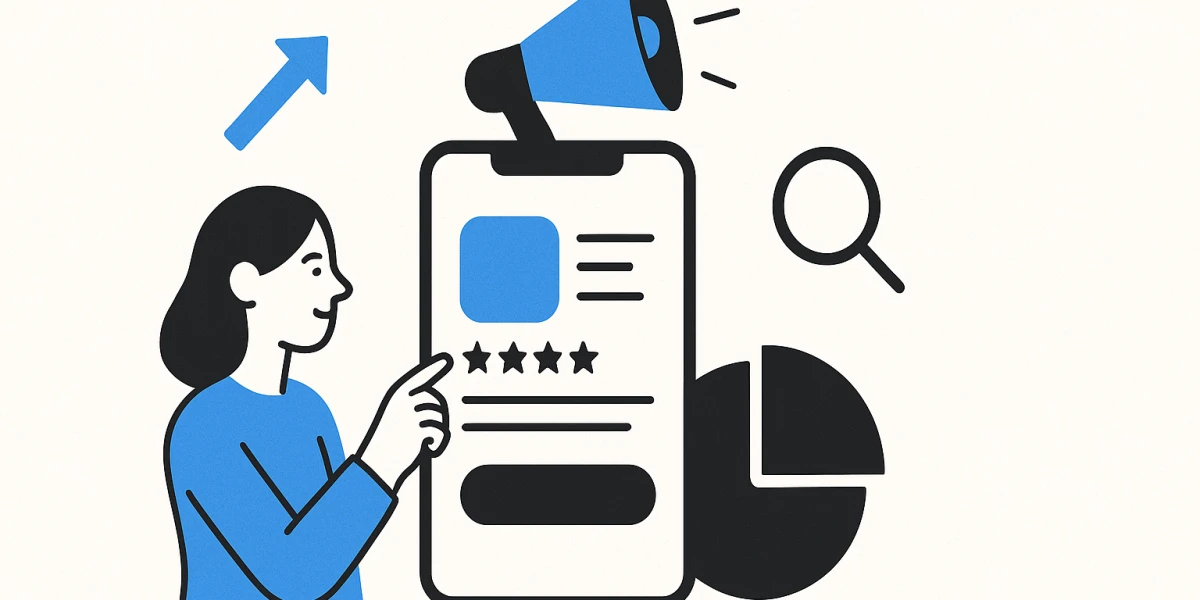
iOS 26 adoption (Feb 2026): why your min-version calls should stay boring
MacRumors summarizes Apple’s latest iOS 26 / iPadOS 26 adoption stats. Useful for planning support windows, QA matrices, and rollout comms.
-

Google App Campaigns in 2026: what changed, what’s still a black box, and how to win anyway
Adapty’s 2026 Google App Campaigns playbook: what’s new (Web→App Connect, Shorts, AAK), how to structure campaigns, and the tracking/creative rules that actually move results.
-

The best ASO tools of 2026: what to evaluate (so you don’t buy dashboards)
AppTweak’s 2026 ASO tooling roundup, reframed into a practical evaluation checklist: coverage, freshness, localization, automation, and how to avoid ‘tool-first’ ASO.
-

AI assistants are becoming a distribution channel - ‘agent-ready’ sites and apps are the next moat
CX Dive’s report on AI assistants mediating customer journeys: what ‘agentic engine optimization’ implies, and the practical ‘digital hygiene’ steps brands can take now.
-

Apple Ads in 2026: why March’s extra search slots will reset your benchmarks
MobileAction’s view on Apple Ads’ March 2026 search results expansion: what changes, what won’t, and the measurement guardrails to put in place before your baselines drift.
-

Push notifications in 2026: how to avoid fatigue (and earn the right to interrupt)
Appbot’s 2026 push notification best practices: transactional vs promo, preference controls, tone, timing, and measuring fatigue.
-

Apple Ads: the ‘stability’ playbook is relevance + control, not automation
Business of Apps’ recap of Viktor Orlov’s Apple Ads talk: why structure and control beat ‘smart bidding’, why IPM is the hidden scaling wall, and how Custom Product Pages turn relevance into lower CPIs.
-
APPlyzer 26 launches with expanded Apple Ads auction visibility
Business of Apps’ write-up on ConsultMyApp’s APPlyzer 26 release: what’s new (top-5 auction visibility, CPP/IAE tracking, market intel) and how to interpret it.
-
How to spot high-impact Custom Product Page opportunities
ConsultMyApp’s CPP framework: attention vs intention, keyword eligibility gates, and a practical way to choose which CPPs are worth building (organic + Apple Ads).
-

Marketing data platforms in 2026: why stacks fail (and what ‘single source of truth’ really means)
LayerFive’s 2026 guide to Marketing Data Platforms (MDPs): why tool sprawl breaks measurement, and what an infrastructure-first stack looks like.
-

2026 mobile app marketing trends: creative systems beat ‘more traffic’
Mobidictum’s write-up of SocialPeta/AdChampagne’s 2026 mobile app marketing trends: fewer advertisers, heavier creative output, and why creative capability is becoming the moat.
-

App Store Marketing Weekly – Week 07 (2026)
The week’s highest-signal ASO + Apple Ads updates, with what it changes for app marketers.
-

Apple Ads: additional search results ad placements roll out in March 2026
Apple is adding more Search Results ad slots in March 2026. What changes operationally, and what app marketers should do next (creative, CPPs, negatives, and measurement).
-
What 7,500 top apps reveal about App Store keywords
ConsultMyApp’s analysis of keyword patterns across the top 250 apps in every US App Store category - including what ‘top apps’ do differently in titles/subtitles.
-
ChatGPT for ASO is useful - but only with live store data
ConsultMyApp’s argument: LLMs help with ideation and drafting, but ASO decisions still require live rankings, search demand signals, and competitive context.
-
Apple will show more ads in App Store search results from March 3
MacRumors’ report on Apple expanding App Store search ads: phased rollout, multiple positions in search results, and what advertisers can (and can’t) control.
-

Privacy Pulse: the US demand map for VPNs, password managers, authenticators & private browsers (iOS vs Android)
APPlyzer snapshot of US privacy-intent demand and the apps that capture it across iOS and Google Play.
-
App Store Connect: new minimum SDK requirements start April 28, 2026
Apple announced new minimum SDK build requirements for App Store Connect submissions. Here’s the quick marketer-friendly version.
-

Apple updates App Review Guidelines for random/anonymous chat apps
Apple clarified that random/anonymous chat apps fall under Guideline 1.2 (UGC). Here’s what that means operationally.
-

iOS changes in Japan: alternative marketplaces and payments are coming
Apple outlines Japan-specific iOS changes enabling alternative marketplaces and out-of-IAP payments - with new security requirements and deadlines.
-
Apple Search Ads in 2026: a practical playbook (structure, bidding, and incrementality)
A no-fluff guide to setting up Apple Search Ads for control and learning: campaign structure, keyword strategy, bid loops, and how to avoid paying for installs you would have earned organically.
-

Google Play’s ‘Ask Play’ is getting smarter - what it means for ASO
Android Authority’s look at Ask Play upgrades and why store listing clarity (metadata + reviews) matters more in an AI Q&A interface.
-

Why is ASO still alive?
ASO didn’t die - it got more operational. Here’s what changed, what still matters, and how to win in 2026.
-

Custom Product Pages for global expansion: 6 practical plays
MobileAction’s guide to using Apple Custom Product Pages for localization, seasonal relevance, Apple Ads message match, and testing.
-

AI-driven app discovery is creating an attribution blind spot
Branch’s AIO App Attribution announcement and what it implies for ASO/SEO as ChatGPT-style discovery grows.
-

How to win ASO during big events: micro-peaks + message match
AppTweak’s sports-event playbook: why event demand spikes in micro-peaks and how to align ASO + Apple Ads + CPPs.
-

ASO news recap (Jan 2026): more Apple Ads inventory + Gemini ‘Ask Play’
AppTweak’s January 2026 ASO updates: expanded App Store search ads inventory, Google Play’s Ask Play, and new store assets.
-

AI is changing ASO: think in intents and keyword clusters
AppTweak’s ‘AI in ASO 2026’ piece: why rankings feel less stable and how to adapt with intent-led semantic clusters.
-

Google Gemini’s Apple Search Ads ‘blanket coverage’ in Dec 2025 - key takeaways
A short, practical summary of ConsultMyApp’s Apple Search Ads data deep dive on Gemini’s unusually broad coverage (and what app marketers can learn from it).
-
App Store search results are getting more ads in March 2026 - what changes for ASO & Apple Ads
A short summary of 9to5Mac’s report on Apple expanding search-result ad placements beyond the #1 slot, and what app marketers should watch.
-

Google Play custom store listings: when to personalize (and what to measure)
AppTweak’s guide to Custom Store Listings: how they differ from experiments, when to use them, and what success looks like.
-

Apple Ads automation in 2026: what to automate (and what not to)
AppTweak’s Apple Ads automation guide: where automation helps first, and the guardrails to keep it from scaling mistakes.
-

Apple Ads tools in 2026: what features actually matter
AppTweak’s buyer’s guide to Apple Ads tools: what to evaluate (intel, CPP tracking, benchmarks, reporting) and how to choose.
-
Apple Search Ads in 2026: placements, setup, and what to optimize first
AppTweak’s 2026 Apple Search Ads guide, focusing on practical levers: intent, structure, CPP alignment, and measurement.
-

A practical ASO strategy for 2026: a repeatable weekly system
AppTweak’s step-by-step ASO strategy guide, focused on building an ongoing process rather than one-off metadata edits.
-

App store reviews in 2026: what they change (and how to use them)
AppTweak’s guide to app reviews: why they impact conversion, how iOS vs Google Play differ, and what teams can do safely.
-

Play Store keyword research in 2026: a practical workflow
AppTweak’s Play Store keyword best practices: how to expand variants, prioritize, and connect keywords to assets and performance.